The Strategic Gap in Industrial B2B Marketing
For a Scandinavian industrial conglomerate with 1,200 employees, the challenge was not a lack of product quality, but a lack of visibility in the right circles. Specialized in high-end automation solutions for manufacturing, the company faced a classic B2B paradox: their technical content was exceptional, yet it struggled to reach the decision-makers who actually signed off on multi-million euro contracts.
The primary pain point was the high Customer Acquisition Cost (CAC) associated with traditional channels. Trade fairs and direct sales teams, while effective, were slow and expensive. In the digital space, the company’s organic reach on LinkedIn was stagnant. The conversion rate from social media interactions to qualified leads (MQLs) hovered below 0.5%, indicating that while users might view the content, it lacked the persuasive authority to trigger a sales conversation. The marketing team possessed the technical expertise but lacked the ‘social proof’ and network penetration needed to break through the noise in the industrial sector.
The Challenges
Before implementing any new strategy, we identified three critical hurdles that had previously hindered digital growth for the client:
- Attribution Blind Spots: The existing CRM setup did not track the source of social interactions. Leads from LinkedIn were often marked as ‘organic’ or ‘unknown,’ making it impossible to calculate the true ROI of digital marketing efforts.
- Generic Content Approach: Previous attempts at social marketing relied on standard product announcements. In a niche industrial market, this failed to differentiate the brand from competitors who were also pushing spec sheets and press releases.
- Lack of Authority Signals: The company’s own LinkedIn presence was professional but not influential. It lacked the ‘Top Voice’ badges and community engagement that signal expertise to skeptical industrial buyers who value peer validation over vendor claims.
The Tech Stack
To bridge the gap between social influence and sales revenue, we deployed a specific technical infrastructure:
- HubSpot CRM: The central hub for lead management, where we implemented custom properties for influencer attribution.
- LinkedIn API: Used to sync profile interactions and company page engagement data directly into the CRM in real-time.
- HubSpot Marketing Hub: For building automated lead scoring models and multi-step email journeys.
- Content Management System (CMS): To manage the co-created technical deep-dives and case studies, ensuring consistent branding across all influencer channels.
- BI Dashboard (Looker Studio): To visualize KPIs such as MQL volume, CAC, and conversion rates in near real-time.
Implementation: From Strategy to Execution
Our approach was not to hire influencers as billboards, but to engage them as technical partners. We identified 12 LinkedIn Top Voices within the manufacturing and automation sectors. These individuals were selected not for their follower count, but for their demonstrated influence on purchasing decisions and their deep technical credibility.
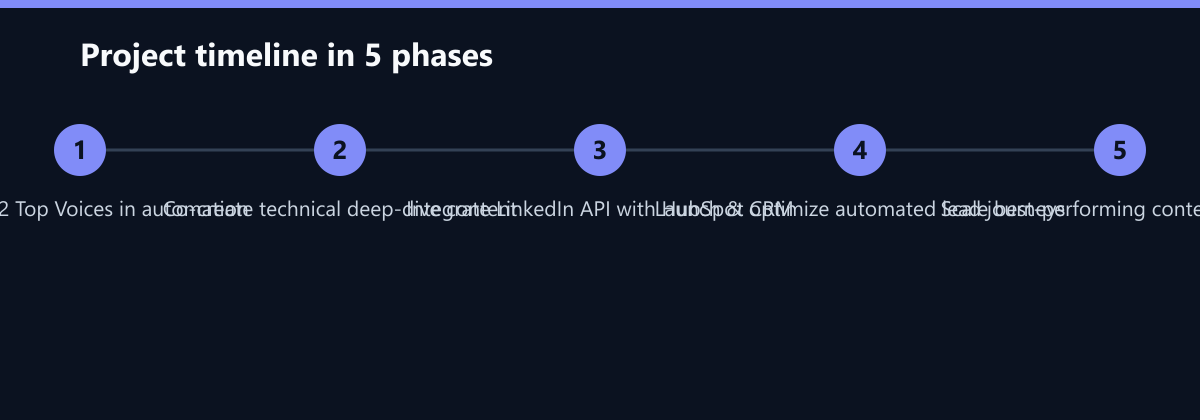
The implementation was divided into three distinct phases over a nine-month period. The first two months were dedicated to strategy and setup. We negotiated partnership agreements with the Top Voices, focusing on content co-creation rather than simple sponsored posts. Simultaneously, we overhauled the technical stack. We established a direct sync between the LinkedIn API and HubSpot, ensuring that every click, comment, and connection request from a target audience member interacting with influencer content was captured and enriched with firmographic data.
In months 3 through 6, the collaborations launched. The content strategy shifted from product promotion to ‘Technical Deep Dives.’ For example, instead of a post about a new robot arm, we co-created a 2,000-word article with a Top Voice analyzing the energy efficiency differences between current and next-gen automation standards. This content was distributed through the influencer’s personal network, leveraging their trust capital. Crucially, we implemented a new lead scoring model. Interactions with this specific content were weighted with a 3x multiplier in the CRM, signaling to the sales team that these leads had high intent and technical relevance.
By months 7 to 9, we moved into scaling. We analyzed the performance of the initial content batches and doubled down on the formats that generated the most SQLs (Sales Qualified Leads). We refined the lead scoring rules based on actual conversion data, removing low-value interactions from the high-priority queue. This iterative optimization ensured that the sales team was only contacted with leads that had demonstrated genuine interest in the technical solutions.
How We Measured It
Measurement was the cornerstone of this project. We defined three core KPIs before launch:
- Monthly MQL Volume: The number of leads meeting the qualification criteria per month.
- Social-to-MQL Conversion Rate: The percentage of social interactions that resulted in a qualified lead.
- Customer Acquisition Cost (CAC): The total cost of the campaign (including influencer fees and content production) divided by the number of closed-won deals attributed to the campaign.
We used the HubSpot attribution model to track the journey of each lead. If a lead engaged with an influencer’s post, downloaded a co-created whitepaper, and subsequently booked a demo, the revenue from that deal was attributed to the influencer channel. This allowed us to calculate a precise ROI. We also monitored the ‘Quality of Lead’ through sales feedback scores, ensuring that the volume increase did not come at the cost of lead relevance.
Results
After nine months, the impact on the client’s bottom line was substantial. The campaign generated a total revenue of €200,000 against an investment of €50,000, resulting in a 4:1 ROI. More importantly, the efficiency of the marketing funnel improved dramatically.
The volume of qualified leads increased from a baseline of 45 MQLs per month to 112 MQLs per month. This represents a 149% increase in lead generation capacity from the social channel. The conversion rate from social interaction to MQL jumped from 0.5% to 2.8%, a 460% improvement. This indicates that the content resonated deeply with the target audience, filtering out low-intent traffic and attracting serious buyers.
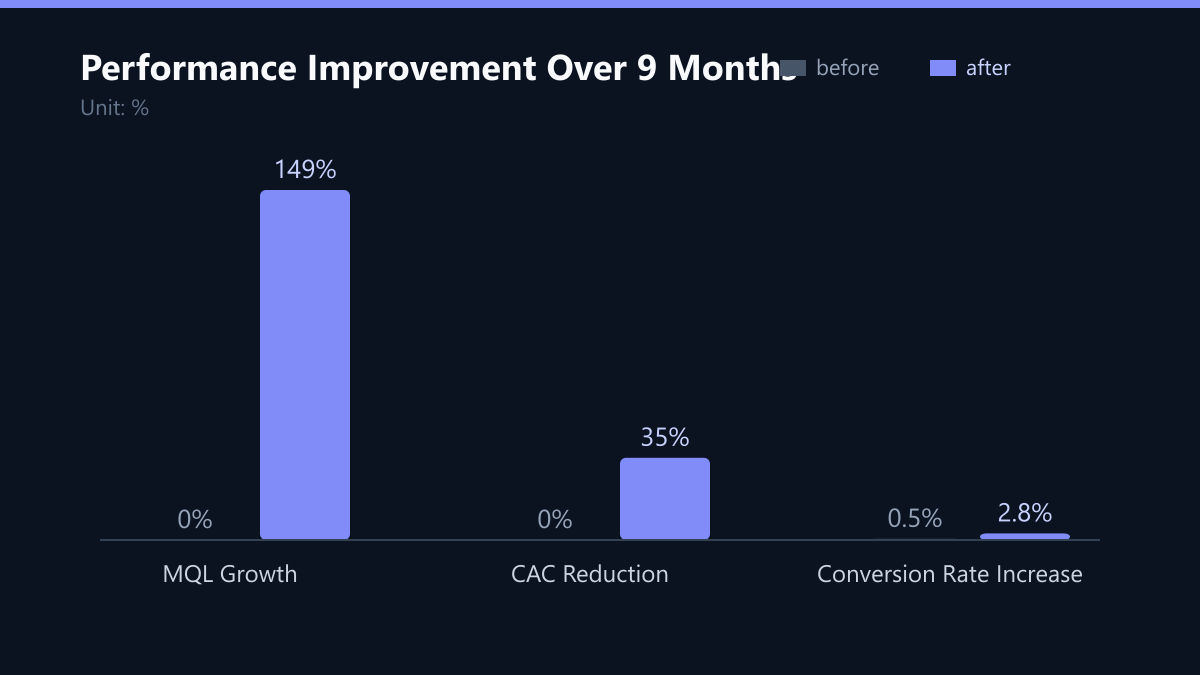
Perhaps the most significant financial metric was the reduction in CAC. The cost to acquire a customer through the social channel dropped from €1,200 to €780, a 35% reduction. This efficiency gain allowed the marketing team to reallocate budget from expensive trade fairs to further digital optimization, creating a positive feedback loop for growth.
Lessons Learned
This case study highlights several critical insights for B2B industrial marketing. First, authority beats reach. In niche markets, a Top Voice with 10,000 highly relevant followers is far more valuable than a generic influencer with 100,000 unengaged followers. The trust transfer is the key mechanism.
Second, technical integration is non-negotiable. Without the API sync and robust lead scoring, this campaign would have been a ‘vanity metric’ exercise. We could have seen high engagement, but we would never have known if it translated to revenue. The ability to attribute revenue to specific content pieces allowed us to make data-driven decisions about which influencers and topics to scale.
Third, content must provide genuine value. The industrial buyer is skeptical of marketing. They responded to the co-created content because it solved a specific technical problem they were facing, not because it advertised a product. The value-first approach was the only way to break through the noise.
What We Would Do Differently Today
While the results were strong, we identified areas for improvement. First, we would have invested more heavily in video content during the initial phase. While written deep-dives performed well, short-form video snippets from the Top Voices explaining key technical concepts would likely have accelerated the conversion rate even further in the first three months.
Second, we would have implemented a more granular A/B testing framework for the landing pages associated with the influencer content. We assumed that the technical content would convert, but testing different value propositions (e.g., ‘Download the Case Study’ vs. ‘Book a Technical Consultation’) could have optimized the MQL-to-SQL conversion rate further.
Finally, we would have engaged the sales team earlier in the process. While we provided them with high-quality leads, a more integrated training session on how to leverage the influencer relationship in the first sales call could have improved the close rate. The sales team was excited by the leads but could have better utilized the ‘warm introduction’ aspect of the influencer collaboration.
Passend dazu
- Performance Marketing
- SEO & AI Search (GEO)
- Affiliate Marketing
- Content & CRO
- CRM Marketing
- Automated Campaign Management: 40% Increase in ROAS for a DACH Industrial Supplier through Dynamic Budget Allocation in Amazon DSP
- HubSpot CRO: 32% Increase in Demo Bookings through A/B Testing of Landing Pages for a DACH Industrial Provider
- Generating 400 SQLs via LinkedIn Events and Live Q&As for a Scandinavian Industrial Software Provider