The Situation: A Bottleneck in the Pipeline
The client, a Series B B2B fintech with 150 employees based in the UK, was experiencing significant friction in their sales pipeline. Despite a strong marketing engine generating a steady flow of leads, the average sales cycle had stretched to 90 days. This duration was well above industry benchmarks and was directly impacting cash flow and growth projections. The core issue was not a lack of interest from prospects, but a breakdown in the handover process between marketing and sales.
Manual processes were the primary culprit. When a lead was qualified by marketing, the transition to sales was slow and often error-prone. Sales representatives frequently received leads with incomplete CRM records, forcing them to spend valuable time on data entry and research before they could even make their first contact. On average, it took 48 hours for a sales rep to reach out to a new lead. In a competitive fintech landscape, this delay was often fatal; prospects had already engaged with competitors who responded within minutes. Furthermore, sales teams reported spending over 15 hours per week on administrative tasks, such as manual follow-ups and data cleanup, rather than selling. This inefficiency created a vicious cycle: reps were too busy with admin work to nurture leads properly, leading to lower conversion rates and longer cycles.
The Challenges
Before diving into the technical solution, we identified three specific structural challenges that needed to be addressed to ensure the success of the automation project:
- Data Silos and Inconsistency: The existing CRM data was fragmented. Lead information from various marketing channels was not standardized, making it difficult to create a unified view of the customer. This inconsistency meant that even if a lead was assigned, the rep often lacked the context needed for a personalized conversation.
- Lack of Immediate Trigger Mechanisms: There was no automated bridge between the moment a lead met the Marketing Qualified Lead (MQL) criteria and the moment a sales task was created. This gap relied entirely on manual monitoring by marketing staff, which was prone to human error and delay.
- Scoring Model Opacity: The previous lead scoring system was static and based on simple form fills. It did not account for behavioral engagement or firmographic data, resulting in a high volume of low-quality leads being pushed to sales, while high-intent leads were sometimes overlooked.
The Tech Stack
To address these challenges, we assembled a focused tech stack designed for speed and reliability:
- Salesforce Sales Cloud: The core platform for managing opportunities, accounts, and automated task assignments.
- Clearbit: Integrated for real-time data enrichment, auto-populating missing firmographic fields (such as company size, industry, and technology stack) before the first rep contact.
- Salesforce Marketing Cloud: Used to manage the nurture sequences for leads not yet ready to buy, ensuring continuous engagement without manual intervention.
- Jira: Utilized for project management and tracking the implementation phases, ensuring transparency between our team and the client’s stakeholders.
The Implementation: Building the Automated Journey
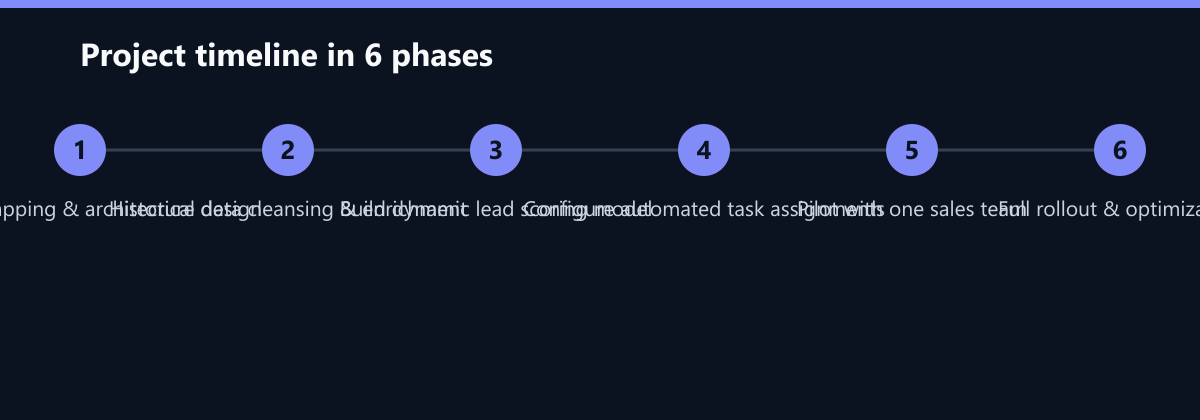
We approached the implementation with a six-week timeline, structured to minimize disruption to ongoing sales activities. The goal was to build a fully automated onboarding journey that triggered immediate, personalized actions upon lead qualification.
The first two weeks were dedicated to process mapping and architecture design. We worked closely with sales and marketing leaders to define what constituted a true MQL and what the ideal first touchpoint should look like. This phase was crucial for aligning expectations and defining the success metrics. We mapped out the existing manual workflow and identified every point of friction where automation could add value.
In weeks three and four, we focused on journey building and integration testing. This was the heavy lifting phase. We implemented a dynamic lead scoring model that combined engagement data (email opens, website visits) with firmographics provided by Clearbit. We configured entry events in Salesforce so that the moment a lead crossed the MQL threshold, a task was instantly assigned to the appropriate sales rep. Simultaneously, we set up the data enrichment pipeline to ensure that when the rep opened the record, all key fields were already populated. We also built the nurture tracks for leads that did not meet the MQL criteria, creating email sequences that would automatically disqualify cold leads after a set period of inactivity, keeping the pipeline clean.
The final two weeks involved a pilot with one sales team. This was a critical step. We monitored the performance of the automated journey in a controlled environment, adjusting triggers and scoring criteria based on real-world feedback. The pilot team reported immediate improvements in lead quality and context, which gave us the confidence to proceed with the full rollout. The full deployment was completed in week six, with all sales teams receiving training on the new workflow.
How We Measured It
To ensure the project delivered tangible value, we established a robust measurement framework before implementation began. We defined four key performance indicators (KPIs) that directly reflected the pain points identified in the situation analysis. Baseline data was collected over a three-month period prior to the project start to establish a reliable control group.
The primary metric was the average deal cycle length, measured from the first sales touchpoint to the closed-won stage. We tracked this using Salesforce report snapshots taken weekly. The second metric was time to first contact, calculated by comparing the timestamp of lead creation in the CRM with the timestamp of the first logged call or email from a sales rep. This data was pulled directly from the Salesforce activity history. The third metric was the MQL to SQL conversion rate, which we calculated by dividing the number of leads accepted by sales (SQL) by the total number of leads designated as MQLs by marketing. Finally, we tracked sales productivity by surveying the sales team on hours spent on administrative tasks versus selling activities, using time-tracking logs provided by the client’s HR department. These metrics were reviewed in weekly stand-ups during the pilot phase and in monthly business reviews post-implementation.
The Results
Within three months of full deployment, the impact of the automated onboarding journey was evident across all key metrics. The system successfully eliminated the manual handover bottleneck, resulting in faster response times and higher quality engagements.
The most significant improvement was seen in the deal cycle. By ensuring that sales reps had immediate access to high-quality, enriched leads, they were able to move prospects through the pipeline more efficiently. The average deal cycle was reduced from 90 days to 54 days, a 40% improvement. This acceleration allowed the company to close more deals within the same fiscal quarter, directly boosting revenue.
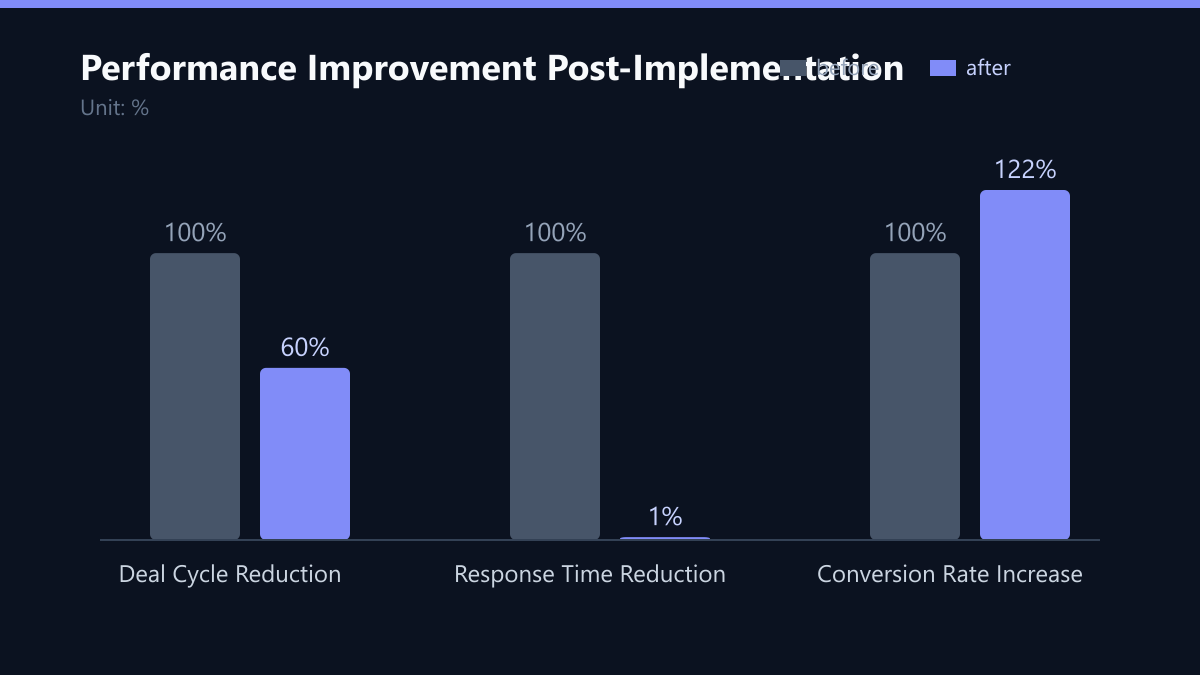
Response times also saw a dramatic transformation. The average time to first contact dropped from 48 hours to under 5 minutes. This near-instant response was a game-changer for the client, as it allowed them to compete with larger, more established fintechs on speed. Sales reps reported that the initial conversations were more productive because they had immediate access to the prospect’s company data and engagement history.
The quality of leads reaching the sales team also improved. The MQL to SQL conversion rate increased by 22%. This was a direct result of the dynamic scoring model, which filtered out low-intent leads and prioritized those with the highest potential. Sales reps reported that they spent less time chasing dead ends and more time working with prospects who were genuinely interested.
Finally, the automation significantly reduced the administrative burden on the sales team. Sales reps saved an average of 12 hours per week on data entry and manual follow-ups. This time was reinvested into selling activities, such as prospecting and closing deals. The team reported higher job satisfaction and lower burnout rates, as the repetitive, low-value tasks were handled by the system.
Lessons Learned
While the project was a success, the process highlighted several important lessons that are relevant for any organization considering similar automation initiatives.
- Data Quality is Non-Negotiable: We found that cleaning historical data before launch was critical for accurate scoring. Attempting to run automation on a dirty dataset would have resulted in incorrect assignments and frustrated sales teams. We recommend dedicating at least 20% of the project timeline to data cleansing and validation.
- Pilot Before Scaling: Starting small with one sales team allowed us to refine triggers and identify edge cases without disrupting the entire organization. This approach reduced the risk of failure and built buy-in from the sales team, who saw the benefits firsthand before the full rollout.
- Keep It Simple: We initially considered adding complex branching logic to the journey, but we decided to keep it simple. Overly complex journeys are difficult to maintain and can lead to leads getting stuck in inactive states. We focused on high-value actions and avoided unnecessary complexity, which made the system more reliable and easier for the client’s team to manage.
What We Would Do Differently Today
Reflecting on the project, there are a few areas where we would adjust our approach if we were to do it again.
First, we would involve the sales team earlier in the design phase. While we did consult with them, involving them in the actual journey building process would have led to more practical workflows and faster adoption. Their insights on what data they actually need during a call would have further refined the enrichment process.
Second, we would have invested more in change management and training. While the pilot team was well-prepared, some of the broader sales team struggled initially with the new workflow. More comprehensive training materials and ongoing support would have smoothed the transition and accelerated the realization of the productivity gains.
Finally, we would have built in more robust error handling for the data enrichment process. In the early days, there were occasional delays in Clearbit data populating, which caused some confusion. Implementing a fallback mechanism or a more robust retry logic would have made the system more resilient to upstream API issues.
Passend dazu
- Amazon Business Pricing API: Automatisierte Wettbewerbspreise in HubSpot integrieren
- Performance Marketing
- SEO & AI Search (GEO)
- Multichannel Journeys in Salesforce: How to Engage Leads Across Multiple Channels
- B2B Retargeting: Paid Social Ads and Email Journeys Combined
- Affiliate Marketing
- Content & CRO
- CRM Marketing
- Reducing Sales Cycle Time by 22% at a German Mid-Market Machinery Manufacturer through HubSpot Lead Scoring and Sales-Centric Nurturing Journeys
- Pipedrive & HubSpot: 18% Higher Close Rate through Automated Deal Updates in the B2B Software Sector (DACH)
- ROAS Optimization in the Scandinavian Fintech Sector: Automated Bid Strategies and Milestone Tracking
- Singapur-Logistikanbieter: 45% schnellere Lead-Zuweisung an Vertrieb durch automatisierte E-Mail-Benachrichtigungen
- Salesforce Reporting Errors: 5 Common Problems and Solutions
- Onboarding Automation for Fintech: Boosting Activation Rate by 25% in the UK Market
- Design Journeys: From Registration to Closed Won in 5 Steps
- Salesforce Custom Objects: When Complexity Pays Off
- Automated Partner Reports: Templates for Salesforce and HubSpot
- Bridging the Attribution Gap: Linking Offline Events to Digital Journeys
- UK Fintech: CRM Consolidation of Salesforce and Mailchimp Boosts Pipeline by 25 Percent
- Automating SaaS Onboarding for 500 UK Clients
- Building 3-Stage B2B Nurturing Journeys for Southern European Markets
- Building AI Authority in Fintech via Semantic Clusters and Local Schema
- Automated Cross-Selling Journeys for B2B Resale
- Cutting Onboarding Churn by 20% with Interactive Chat Journeys
- Automated CIO Nurture Journeys Drive 8x ROI for SaaS Webinars
- Reversing Negative Sentiment in Six Weeks for a Berlin Fintech
- Automated Onboarding Journeys for Community Members
- Scaling Discord Engagement to 50k Members for a Fintech App