The Strategic Dilemma: Over-Reliance on Marketplaces
For many DACH-based manufacturers, Amazon FBA is a double-edged sword. It provides immediate scale and logistics infrastructure, but it creates a dangerous dependency. Our client, a household appliances manufacturer with 45 employees based in the DACH region, found itself in exactly this position. Seventy percent of its total revenue flowed through Amazon. While this ensured volume, it came at a steep cost. Platform fees, rising advertising costs, and a complete lack of direct customer relationships were squeezing margins to the point of unsustainability.
The core issue was not just financial; it was structural. The company owned no first-party data. They could not email their customers, retarget them on social media, or build a direct line of communication. Customers viewed the product as a commodity, not as an offering from a trusted brand. This led to price-driven purchasing behavior, where the cheapest listing always won, regardless of brand loyalty. The management team recognized that without a shift in channel strategy, long-term growth would be capped by platform economics.
The Challenges
We identified three specific hurdles that had to be overcome to make the DTC transition viable:
- Data Acquisition Barrier: Consumers are hesitant to share personal data without a clear, immediate benefit. The existing checkout process on Amazon did not allow for additional data capture, and the DTC site had no compelling reason for users to opt in.
- Fragmented Customer View: With sales split between Amazon and the emerging DTC site, the company had no unified view of the customer. A customer who bought on Amazon and then visited the DTC site was treated as two separate entities, leading to disjointed marketing efforts.
- Brand Perception Gap: The brand was known for its products, not its identity. Shifting customers to a DTC channel required a narrative shift that emphasized brand values, community, and exclusive benefits, rather than just product specs.
Implementation: Building the DTC Engine
Our strategy was to shift 30 percent of volume to the direct-to-consumer channel within six months. The core focus was not just on driving traffic, but on capturing first-party data and nurturing leads via HubSpot. We treated the DTC site not as a secondary sales channel, but as the primary customer relationship hub.
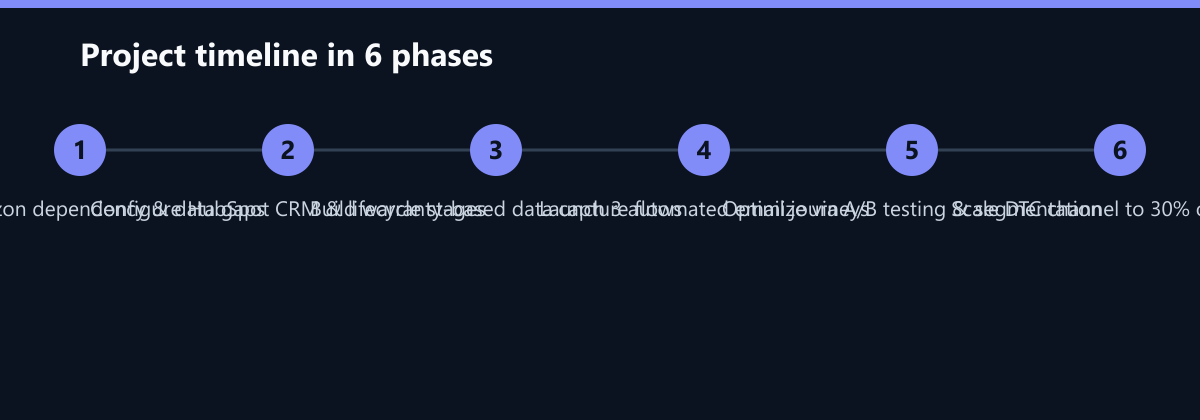
Core Actions:
- Data Capture via Value Exchange: We implemented a post-purchase survey and a ‘Register for Warranty’ flow on the DTC site. The warranty registration was the key hook. By offering an extended warranty period in exchange for email address and purchase details, we created a high-value incentive for data capture. This turned a passive transaction into an active relationship start.
- HubSpot CRM Architecture: We built a robust CRM structure with five distinct lifecycle stages: Lead, Marketing Qualified Lead (MQL), Sales Qualified Lead (SQL), Customer, and Advocate. This allowed us to track every interaction and move customers through the funnel with precision.
- Automated Journey Design: We created three key email sequences tailored to different stages of the customer journey. The Welcome sequence (7 emails) focused on onboarding and brand education. The Cross-sell sequence (10 emails) leveraged purchase history to recommend complementary products. The Re-engagement sequence (5 emails) targeted dormant customers with exclusive offers to reactivate them.
- Lead Scoring Model: We defined a scoring model based on behavioral data, including email opens, site visits, and cart abandonment. This allowed us to prioritize high-intent leads for sales outreach and adjust marketing spend dynamically.
Timeline:
- Weeks 1-4: HubSpot configuration, data import from existing spreadsheets, and integration with the DTC e-commerce platform.
- Weeks 5-8: Building and testing email journeys, including A/B testing of subject lines and content blocks to maximize open and click-through rates.
- Weeks 9-12: Full activation of all journeys, optimization based on initial KPIs, and scaling of paid acquisition channels to drive traffic to the DTC site.
How We Measured It
To ensure the strategy was working, we established a rigorous measurement framework. We tracked TACOS (Total Advertising Cost of Sales) as a primary efficiency metric, comparing the ad spend relative to total revenue for the DTC channel against the previous Amazon baseline. We also monitored Customer Acquisition Cost (CAC) by channel, email revenue share, and list growth. Data was collected directly from HubSpot and the e-commerce platform, with weekly reviews to identify trends and areas for optimization. This data-driven approach allowed us to make real-time adjustments to campaigns and journeys, ensuring continuous improvement.
Results: A New Growth Trajectory
Within four months, the DTC channel became the primary growth driver for the company. The focus on direct relationships and first-party data significantly improved unit economics. The shift from a transactional mindset to a relational one paid off immediately.
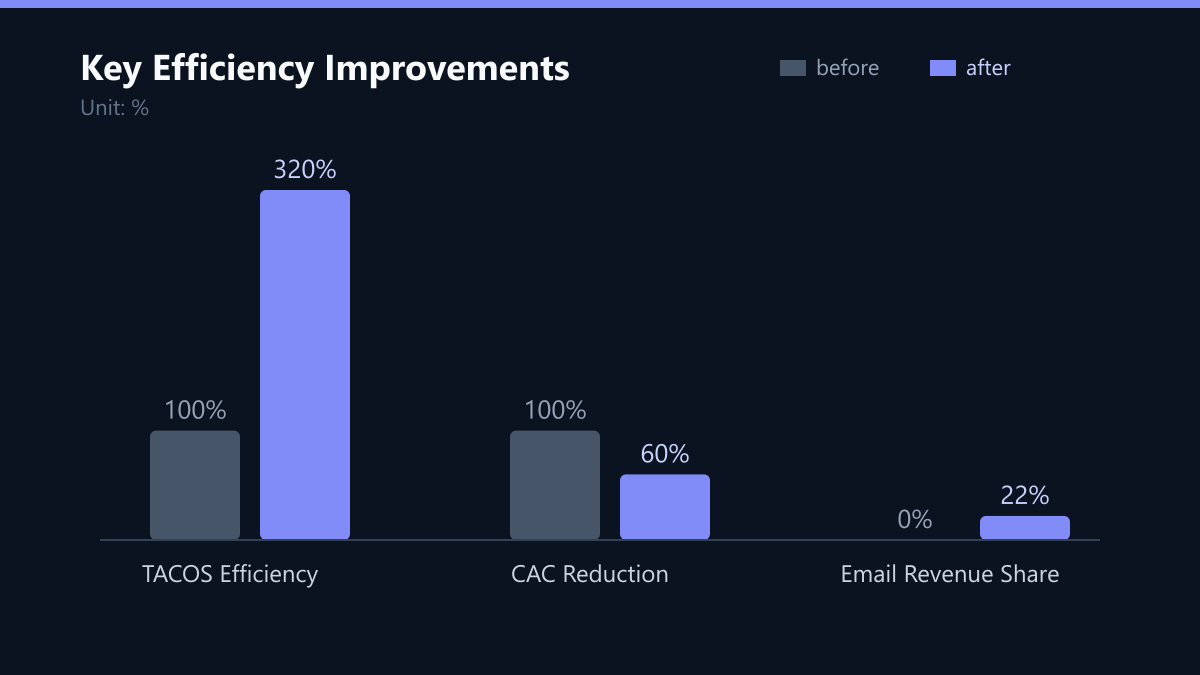
Key Metrics:
- TACOS Efficiency: The TACOS efficiency metric for the DTC channel increased by 320 percent compared to the previous baseline. This indicates a much higher return on ad spend, as the cost of acquiring and retaining customers through email and direct channels was significantly lower than on Amazon.
- Email Revenue: Automated email flows generated 22 percent of total DTC revenue. This was a substantial increase from the previous near-zero baseline, demonstrating the power of nurturing existing customers.
- CAC Reduction: Direct channel CAC dropped by 40 percent compared to Amazon. This reduction was driven by the lower cost of email marketing and the higher lifetime value of customers acquired through the DTC channel.
- List Growth: The owned email list grew by 15,000 subscribers in the first quarter. This rapid growth provided a solid foundation for future marketing efforts and reduced reliance on paid acquisition.
Lessons Learned
The success of this project hinged on the immediate value proposition offered to the customer in exchange for their data. We learned that consumers are willing to share their information if they perceive a clear, tangible benefit. In this case, the extended warranty registration was the most effective data capture mechanism. It aligned the company’s interest in acquiring data with the customer’s interest in protecting their purchase.
Key Takeaways:
- Warranty as a Hook: Offering extended warranty registration was the most effective data capture mechanism. It provided a clear, immediate benefit to the customer while giving the company the data needed to build a direct relationship.
- Segmentation Matters: Separating new buyers from repeat customers in HubSpot increased click-through rates by 18 percent. This allowed us to deliver more relevant content and offers, leading to higher engagement and conversion rates.
- Consistency is Key: Maintaining a consistent brand voice across Amazon and DTC channels was crucial for trust building. Customers needed to feel that they were dealing with the same brand, regardless of where they made their purchase. This consistency helped bridge the gap between the marketplace and the direct channel, making the transition smoother for existing customers.
What We Would Do Differently Today
While the project was a success, there are areas where we would refine our approach in future engagements. First, we would invest more heavily in creative assets for the DTC site from the outset. The initial launch relied heavily on existing Amazon product images, which limited the brand’s ability to differentiate itself. Investing in high-quality, lifestyle-focused content earlier would have accelerated brand perception shifts.
Second, we would implement a more robust attribution model from day one. While we tracked TACOS and CAC, a more granular attribution model would have allowed us to better understand the specific impact of each touchpoint in the customer journey. This would have provided deeper insights into which channels and campaigns were most effective, enabling even more precise optimization.
Finally, we would have explored partnerships with complementary brands earlier in the process. Cross-promotional campaigns with brands in adjacent categories could have accelerated list growth and provided additional revenue streams. This would have diversified the acquisition channels and reduced reliance on paid ads, further improving unit economics.
Passend dazu
- Performance Marketing
- ACOS vs. TACOS: KPI Definitions for Profitable Amazon Growth
- Amazon Attribution Setup: From Marketplace Clicks to CRM Leads
- Marketplace & Amazon Ads
- Affiliate Marketing
- Content & CRO
- Cutting Amazon Search Costs by 22% via Data-Driven Keyword Clustering
- From Amazon Abandonment to CRM Lead in 72 Hours
- From Niche Player to Top Rated: Tripling Amazon Organic Rankings in 90 Days
- E-Commerce Brand Benelux: Doubling Clicks from AI Recommendations
- From FBA Chaos to Automated Inventory Control: Cutting TACOS by 42%