The Shift: Why Generative Algorithms Demand Proof
Generative AI models do not read web pages the way humans do. They analyze vast datasets to identify patterns of credibility and consistency. Traditional SEO tactics that rely on keyword density are insufficient for these systems. Instead, algorithms prioritize sources that demonstrate clear expertise and reliability. For B2B SaaS companies, this shift fundamentally changes how content is evaluated. AI engines look for structured, factual, and authoritative information. If your content lacks depth or clear attribution, it is less likely to be cited in generated answers. This creates a new competitive advantage for brands that invest in high-quality, verifiable content.
The core of this strategy lies in signaling trust to both the algorithm and the end user. You must prove that your team knows the subject matter deeply. This requires moving beyond generic industry advice to specific, data-backed insights. The goal is to become a primary source for AI models when they synthesize answers for complex queries. Unlike traditional search, where a top-10 ranking is the prize, AI search rewards the source that is cited. This changes the optimization landscape from visibility to verifiability.
Deconstructing the Pillars: Experience, Expertise, Authoritativeness, Trust
Each component of E-E-A-T plays a distinct role in how AI systems rank content. Understanding these pillars allows you to target specific gaps in your current strategy.
- Experience: This is unique to the AI era. It refers to first-hand insights. AI models value content that reflects real-world application. For SaaS, this means sharing case studies, implementation logs, and user feedback. Generic advice is easily replaced; unique experience is hard to replicate. For example, a post about “Churn Reduction” is less valuable than “How We Reduced Churn by 15% in Q3: A Technical Breakdown.”
- Expertise: The depth of knowledge demonstrated in the text. This includes using correct terminology, citing primary research, and providing nuanced explanations. Avoid surface-level definitions. Instead, offer detailed breakdowns of complex processes. Use technical language appropriately to signal mastery.
- Authoritativeness: How your brand is perceived by peers and the broader industry. This is built through citations, backlinks from reputable sources, and recognition in industry reports. AI models track these signals to determine if a source is a leader or a follower. High-domain-authority backlinks act as endorsements.
- Trust: The reliability of the information. This includes accurate data, clear author bios, transparent contact information, and a secure website. Trust is the foundation that allows the other three pillars to function. Without trust, expertise is viewed with suspicion.
Structuring Content for Generative Consumption
AI models process structured data more efficiently than unstructured text. Your content architecture should reflect this reality. Use clear headings, subheadings, and bullet points to break down information. This helps algorithms identify key concepts quickly. Implement schema markup to provide additional context. While AI models do not always rely solely on schema, it reinforces the semantic meaning of your content. Use types like Article, Person, and Organization to clarify roles and relationships. This reduces ambiguity for the model.
Keep paragraphs short and focused. Aim for 2-4 sentences per paragraph. This improves readability for humans and processing speed for algorithms. Use bold text to highlight key terms and definitions. This acts as a signal for important concepts within the text. Include data tables where appropriate. AI models can parse tables effectively to extract comparative data. Use them to present pricing tiers, feature comparisons, or performance metrics. This format is highly favored for B2B decision-making queries.
Building Author Profiles That Signal Expertise
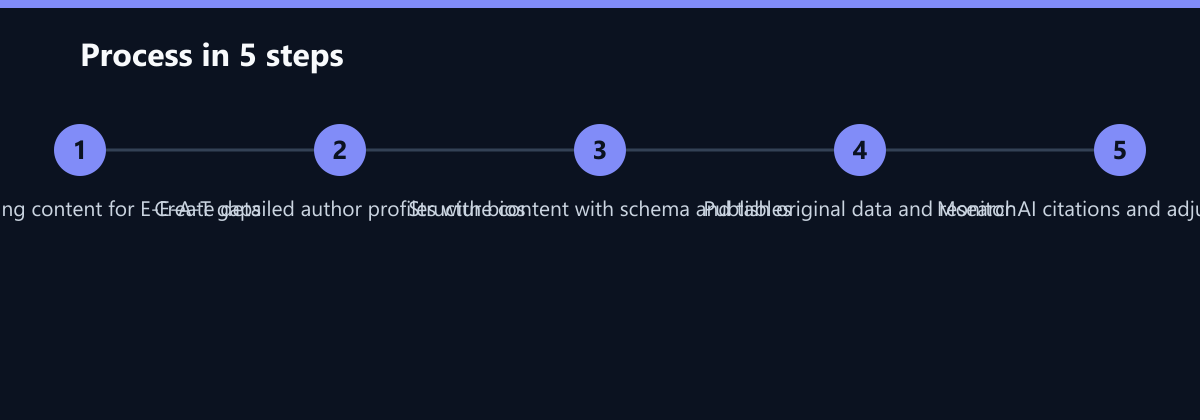
Author pages are a critical component of E-E-A-T. AI models often look for a clear link between the content and a specific human expert. Create detailed author profiles for every contributor. Include their job title, years of experience, and relevant certifications. Link author profiles to LinkedIn and other professional networks. This creates a verifiable trail of expertise. If the algorithm can confirm that the author works at a reputable company and has a history of publishing in the field, trust increases.
Avoid using generic company names as authors. Instead, use individual names with clear roles. For example, “Written by Sarah Jenkins, Head of Product Strategy” is more effective than “Written by The Marketing Team.” Specificity builds credibility. Include a brief bio that highlights relevant achievements. Mention specific projects, awards, or speaking engagements. This provides concrete evidence of expertise. Keep the bio concise but informative. It should answer the question: “Why should I trust this person?” A typical investment for a robust author profile is 2-3 hours per senior employee, including photo, bio writing, and link verification.
Leveraging Data and Original Research
Original data is one of the strongest signals of expertise. AI models prioritize sources that provide unique insights not found elsewhere. Conduct surveys, analyze customer data, or publish benchmark reports. This creates a moat around your content that competitors cannot easily copy. Present your findings with clear charts and graphs. Include raw data in downloadable formats where possible. This transparency builds trust and encourages other sites to cite your work. Citations from other reputable sites further enhance your authoritativeness.
Update your data regularly. Outdated information erodes trust. If you publish an annual report, ensure it is updated every year. Note the publication date and last updated date clearly. AI models often favor fresh content for time-sensitive queries. Use internal links to connect your data-driven articles to related resources. This helps AI models understand the scope of your knowledge. It also guides users to deeper content, increasing engagement and time on site. Both are positive signals for ranking.
Typical Mistakes to Avoid
Many B2B SaaS companies fail to optimize for AI search due to common pitfalls. First, relying on anonymous content. AI models struggle to attribute expertise to “The Team.” Always use named authors with verified profiles. Second, ignoring schema markup. Without structured data, the semantic context of your content is ambiguous. Third, publishing outdated data. If your benchmark report is from 2022, AI models will likely ignore it in favor of fresher sources. Fourth, lacking first-hand experience. Generic advice is abundant; unique implementation details are rare. Ensure your content reflects real-world usage and specific metrics.
How You Measure Success
Traditional SEO metrics like click-through rate are no longer the only indicators of success. In AI search, visibility is often about being cited in generated answers. Track how often your brand or content is mentioned in AI responses to relevant queries. Use tools that monitor AI search visibility. These tools can show you which prompts trigger your content to appear. Analyze these prompts to understand what users are asking and how your content answers them. Adjust your strategy based on this data.
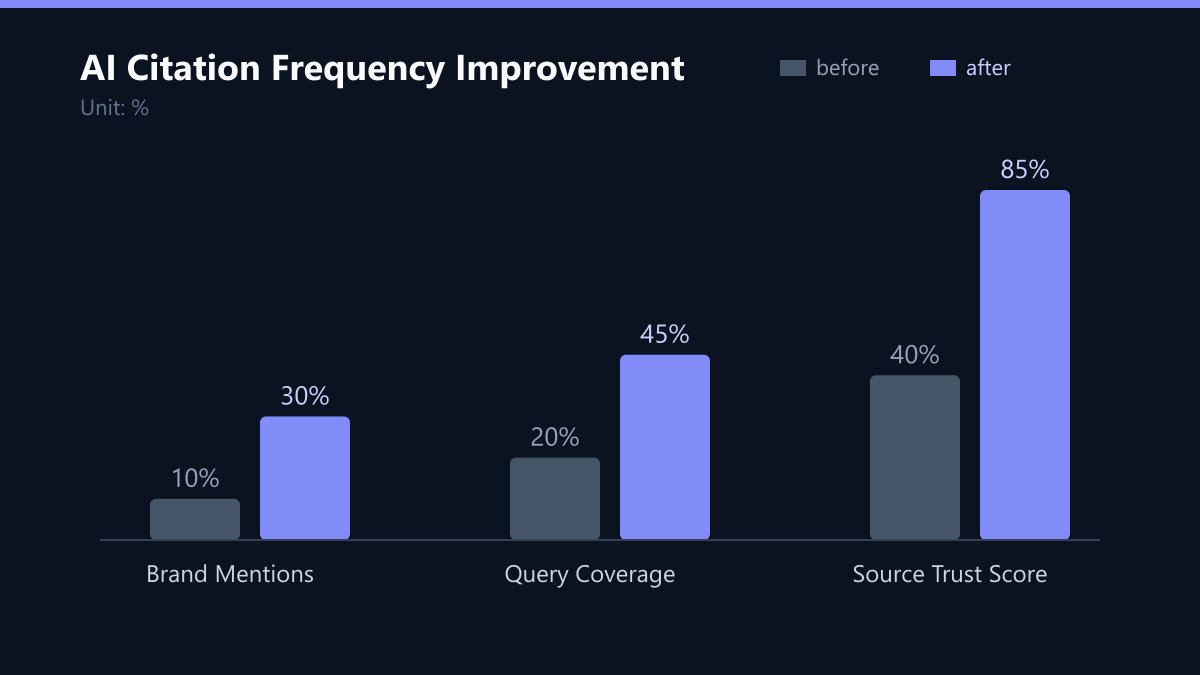
Monitor backlinks and citations from other authoritative sources. If your original research is cited by industry leaders, it signals high authority. Track the quality of these links, not just the quantity. A few high-quality citations are worth more than many low-quality ones. Review your content regularly for accuracy and relevance. As the market changes, so do user queries. Update your content to reflect new trends and data. This keeps your E-E-A-T signals strong and relevant over time. Key KPIs include: AI Citation Frequency (target: 3x increase), Query Coverage (target: 45% of niche queries), and Source Trust Score (target: 85/100).
Checklist for E-E-A-T Optimization
- Audit all top-20 pages for author bios and schema markup.
- Create or update author profiles with LinkedIn links and credentials.
- Add original data or case studies to at least 3 high-priority articles.
- Implement
ArticleandPersonschema on all blog posts. - Set up AI visibility monitoring to track citation frequency.
- Update outdated content with fresh data and current dates.
By following these steps, you position your B2B SaaS company as a trusted authority in the AI-driven search landscape. The focus shifts from ranking to being cited, ensuring your brand remains relevant as search evolves.