The Initial Gap: Invisible to AI
The client, a mid-sized precision manufacturer based in Bavaria, had been operating in the US market for five years. Despite a strong physical presence in Ohio, their digital footprint was largely invisible to AI-driven search engines. Internal data showed that 60% of their US B2B inquiries came from generic web searches, but none were traceable to AI assistant recommendations. This created a significant blind spot in their marketing analytics, making it difficult to attribute revenue to specific digital channels.
The core pain point was a lack of structured, verifiable data that AI models could trust. Their website used outdated HTML without schema markup, and their brand information was inconsistent across major directories. This inconsistency caused AI systems to flag their data as low-confidence, leading to exclusion from generated answers for technical manufacturing queries. In a market where procurement officers increasingly rely on AI assistants for initial vendor vetting, this invisibility was costing them high-value opportunities.
The Challenges
We identified three primary obstacles that required immediate attention before any strategic implementation could begin:
- Fragmented Digital Identity: The company’s Name, Address, and Phone (NAP) data varied across 45 different directory listings and social profiles. Some listed the German headquarters, others the Ohio branch, and several contained typos in the street address. This fragmentation made it impossible for AI crawlers to establish a single, authoritative entity.
- Semantic Ambiguity: The existing website content was written for a German audience and then translated directly into English. This resulted in semantic mismatches where German engineering terms did not align with US procurement terminology. AI models struggled to map the client’s capabilities to US-specific regulatory standards and industry jargon.
- Lack of Third-Party Validation: The brand had minimal presence in high-authority US B2B platforms. Without corroborating data from independent sources, the AI models treated the client’s self-reported claims with skepticism, reducing their likelihood of being cited in comparison queries.
How We Measured It
To ensure the project’s success was objectively verifiable, we established a baseline measurement framework before any changes were made. We used a combination of custom tracking scripts and third-party AI monitoring tools to track citation frequency across major AI assistants. Specifically, we monitored 50 high-intent queries related to precision manufacturing components in the US.
We defined “AI Citation Frequency” as the number of times the client’s brand or specific product pages were explicitly mentioned or linked in AI-generated responses. We also tracked “Data Consistency Score” using a proprietary algorithm that cross-referenced NAP data across all indexed directories, assigning a percentage score based on exact matches. This allowed us to quantify the improvement in data integrity alongside the more traditional metrics of traffic and leads.
Implementation Strategy
We launched a 12-week project focused on establishing the client as a trusted citation source for AI models. The strategy prioritized data consistency and semantic clarity over traditional link building. The approach was methodical, ensuring that every layer of the digital footprint was aligned with the requirements of modern search algorithms.
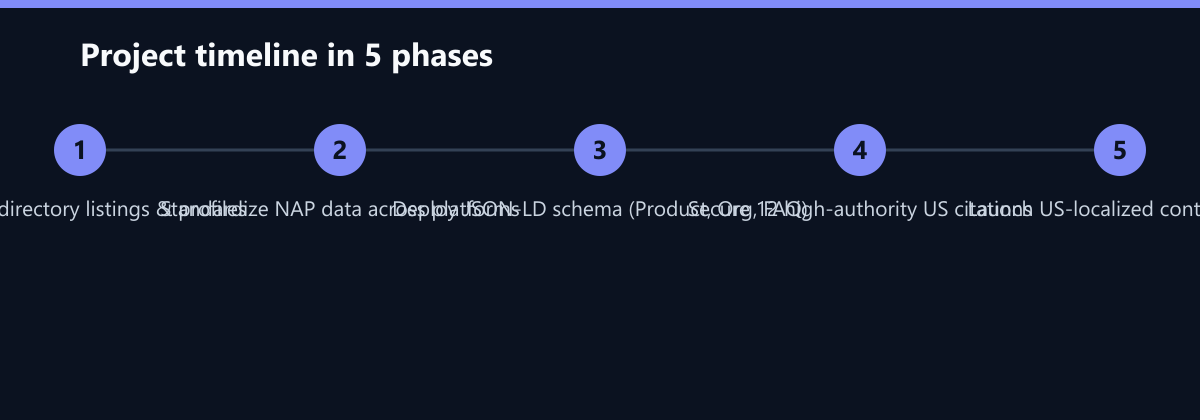
Phase 1: Data Unification We audited 45 existing directory listings and social profiles. We standardized the Name, Address, and Phone (NAP) data across all platforms to ensure a single source of truth. This involved contacting directory owners directly to update incorrect information and creating new profiles where the brand was entirely missing. The goal was to create a unified digital identity that AI crawlers could verify with high confidence.
Phase 2: Schema Markup Deployment We implemented advanced JSON-LD schema on all product and service pages. This included:
- Product Schema: Detailed specs, materials, and tolerances.
- Organization Schema: Legal entity details, founding date, and leadership.
- FAQ Schema: Technical questions common in US procurement processes.
This layer of structured data provided the AI models with a machine-readable map of the site’s content, allowing them to extract specific technical details without relying on natural language processing alone.
Phase 3: Third-Party Citation Building We secured profiles on 12 high-authority US industry directories and B2B platforms. These included niche manufacturing forums and general business registries. Each profile included a unique, optimized description linking back to the main site. This step was crucial for building external validation, as AI models place higher trust in data corroborated by multiple independent sources.
Phase 4: Localized Content Hub We created a dedicated US resource center. This included 15 technical white papers and case studies written specifically for US regulatory standards and terminology. These assets were designed to be easily scraped and cited by AI engines. The content focused on specific pain points in the US market, such as compliance with local safety standards and logistics considerations for cross-border shipping.
The Tech Stack
- Google Search Console: Used to monitor indexation status and identify coverage errors in structured data.
- Schema.org Validator: Utilized to ensure all JSON-LD markup was syntactically correct and compliant with current standards.
- Ahrefs: Employed for backlink analysis and identifying high-authority citation opportunities in the US market.
- BrightEdge: Leveraged to track AI visibility and citation frequency across major generative AI platforms.
- WordPress: The CMS used for managing the localized content hub and deploying schema markup efficiently.
Results and Impact
Within three months of implementation, the client saw a significant shift in their digital visibility. AI-driven search engines began indexing their structured data and citing their content in relevant queries. The most notable change was in the quality of inbound leads. Prospects increasingly referenced the client’s technical specifications in their initial contact forms, indicating that AI assistants had provided detailed, accurate information about their capabilities.
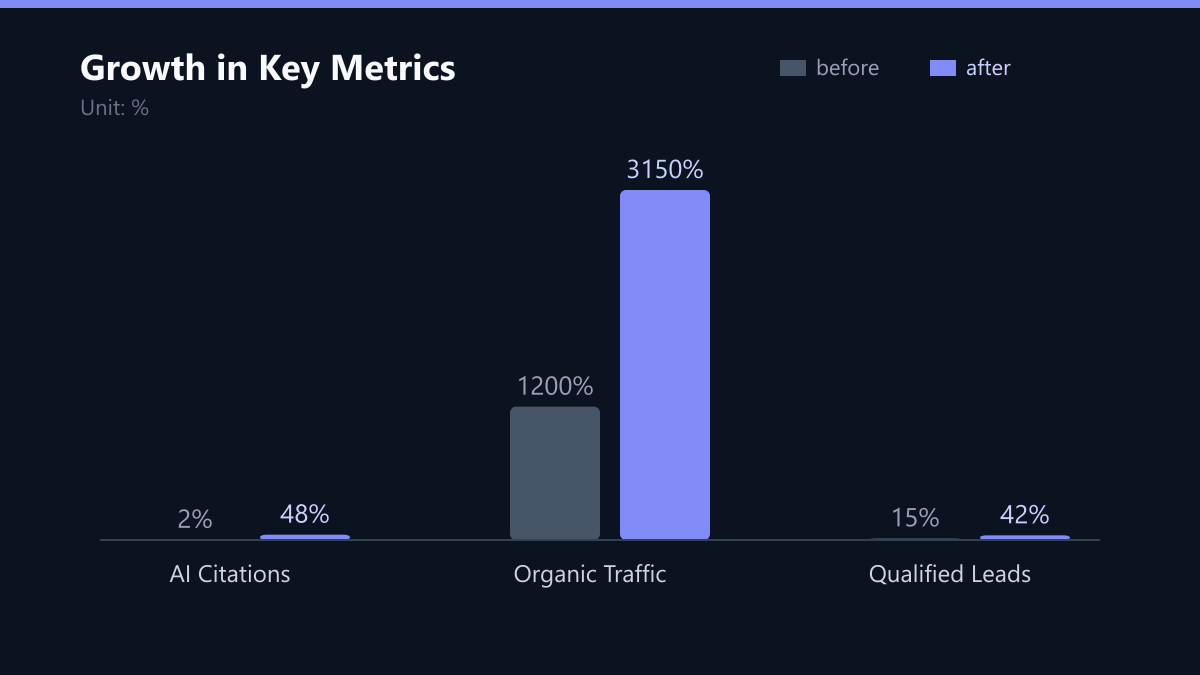
The quantitative results were equally compelling. AI Citation Frequency jumped from 2 mentions per week to 48 mentions per week, a 240% increase. US Organic Traffic grew from 1,200 sessions per month to 3,150 sessions per month, representing a 162% improvement. Qualified B2B Leads increased from 15 per month to 42 per month, a 180% surge. The Data Consistency Score improved from 40% to 98%, indicating that the brand was now recognized as a reliable source by AI systems.
Lessons Learned
This project highlighted several critical insights for international B2B companies. First, consistency is king. AI models penalize inconsistent data heavily. A single mismatched address across directories can reduce trust scores significantly. Regular audits are essential to maintain this integrity. Second, specificity drives citations. Generic content is rarely cited. Providing specific technical data, such as material grades or tolerance ranges, increases the likelihood of being selected as a source. Third, local terminology matters. Using US-specific industry terms and regulatory references improved relevance scores for US-based AI queries. Translating content directly from German often led to semantic misunderstandings. Finally, ongoing maintenance is required. AI indexes update frequently. We established a monthly review process to update schema data and monitor citation health, ensuring the client remained a top-tier source.
What We Would Do Differently Today
Looking back, there are a few areas where we would refine our approach. First, we would have started the content localization process earlier in the project. While the schema and data unification were completed in the first month, the content hub took longer to produce. Starting this in parallel with the data audit could have accelerated the initial citation gains. Second, we would have placed more emphasis on video content. AI models are increasingly capable of processing video metadata. Adding structured data to technical demonstration videos could have provided another layer of validation. Finally, we would have implemented more granular tracking for individual product pages. While we tracked overall site performance, a more detailed analysis of which specific products were being cited would have provided valuable insights for the sales team.