The High Cost of Ignoring Silence
In the DACH B2B SaaS landscape, silence is not neutral; it is a signal of decaying intent. A lead is officially classified as dormant after 90 days of inactivity. This period of quiet often reflects the region’s characteristic high formalism and extended decision cycles. However, ignoring these leads has a tangible financial impact: conversion probability drops by 40% if no re-engagement strategy is deployed.
It is critical to distinguish between ‘cold’ and ‘dormant’ leads. Cold leads have never engaged with your content, whereas dormant leads previously demonstrated clear intent. Reactivating a dormant lead requires a fundamentally different tone than initial outreach. The focus must shift from feature discovery to value reinforcement. You are not selling; you are reminding.
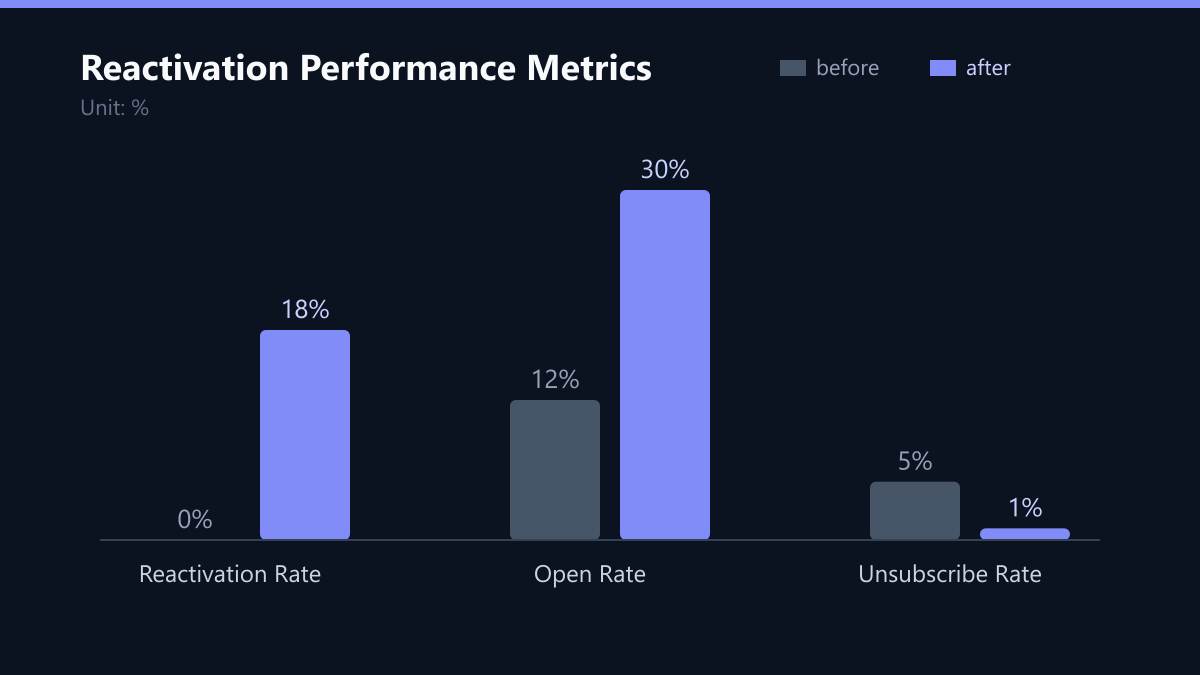
Key Metric: The primary indicator of success is the ‘Reactivation Rate’, calculated as (Re-engaged Leads / Total Dormant Leads) * 100. For mid-market segments in the DACH region, a healthy target range is 15-20%. Achieving this requires a structured, automated approach rather than sporadic manual emails.
Template 1: The Value-Add Check-In
This template is designed for leads who downloaded high-value content, such as a whitepaper, but never booked a demo. The objective is to provide fresh value without immediately demanding a meeting. This approach respects the DACH preference for substance over sales pressure.
Subject: New data for [Company Name]?
Body Structure:
- Reference the original download (e.g., ‘The Q3 Benchmark Report’).
- Share one specific, recent insight relevant to their industry.
- Include a soft CTA to view the new case study.
Automation Logic: Trigger 90 days after the last email open. Send via HubSpot lifecycle stage ‘MQL’. If no click is registered within 7 days, pause the sequence to prevent fatigue.
Template 2: The Social Proof Nudge
DACH buyers rely heavily on peer validation to mitigate risk. This template targets leads who visited pricing pages but did not proceed. By showcasing a comparable client, you reduce the perceived risk of adoption.
Subject: How [Similar Company] reduced costs by 22%
Body Structure:
- Name a comparable client in the same vertical.
- Quantify the result (e.g., ‘Saved 120 hours per month’).
- Link to a short video testimonial or detailed case study.
Automation Logic: Trigger 120 days after lead creation. Use dynamic content to insert industry-specific case studies. An unsubscribe link is mandatory in the footer for GDPR compliance.
Template 3: The Feature Update Alert
This template targets leads who engaged with specific feature pages. It signals product maturity and ongoing development, which is particularly effective for technical buyers who value stability and innovation.
Subject: Update: [Feature Name] is now live
Body Structure:
- Briefly describe the new feature in one sentence.
- Explain the direct benefit to their workflow.
- Provide a link to the release notes or documentation.
Automation Logic: Trigger when a new major feature launches. Limit the audience to leads who viewed related content in the last 6 months. Keep the email under 100 words to ensure high readability.
Template 4: The Direct Break-Up
Use this template only after two failed reactivation attempts. It serves as the final chance to re-engage before archiving the lead. The tone must be respectful, concise, and free of desperation.
Subject: Should we keep you on the list?
Body Structure:
- State clearly that you have not seen activity in 180 days.
- Ask if their needs have changed.
- Offer two options: ‘Still interested’ or ‘Unsubscribe’.
Automation Logic: Trigger 180 days after last interaction. If no reply is received within 14 days, move the lead to the ‘Unengaged’ lifecycle stage. Suppress them from all future marketing campaigns to maintain list hygiene.
Implementation and Measurement Strategy
Do not send these templates manually. Use HubSpot or Salesforce Marketing Cloud for automation. Ensure GDPR compliance by verifying consent status before every send. Manual processes are prone to error and do not scale.
Best Practices:
- Personalize the first line with the recipient’s company name.
- Use plain text formatting to improve inbox placement.
- Test subject lines with A/B testing (20% sample).
- Monitor bounce rates; remove hard bounces immediately.
KPIs to Track:
- Open Rate: Target 25-35%.
- Click-Through Rate: Target 3-5%.
- Reply Rate: Target 2-4%.
- Reactivation Rate: Target 15%.
Adjust send times based on historical data. DACH B2B users typically open emails between 9:00 and 11:00 AM local time. Consistency in timing builds familiarity and trust.
Typical Mistakes to Avoid
-
Ignoring GDPR Consent Checks: Sending emails to leads without verified consent is a legal risk. Always integrate a consent verification step in your automation workflow. If consent is ambiguous, assume it does not exist.
-
Over-Personalization with Wrong Data: Using incorrect company names or job titles erodes trust instantly. In the DACH market, accuracy is a sign of professionalism. Validate data before sending.
-
Sending Too Frequently: Bombarding dormant leads with multiple emails per week increases unsubscribe rates. Stick to the 30-45 day spacing rule. Patience is more effective than persistence.
-
Lack of Clear CTAs: Vague calls to action lead to low engagement. Every email must have one clear, single action for the user to take. Multiple CTAs dilute focus and reduce click-through rates.
How You Measure Success
Success is not just about opens; it is about re-engagement. Track the following metrics to evaluate the effectiveness of your reactivation strategy:
- Reactivation Rate: The percentage of dormant leads who engage again. Target: 15-20%.
- Open Rate: Indicates subject line effectiveness. Target: 25-35%.
- Click-Through Rate: Measures content relevance. Target: 3-5%.
- Reply Rate: Shows high-intent interest. Target: 2-4%.
- Unsubscribe Rate: Monitors list health. Target: <1%.
Use A/B testing to optimize subject lines and body copy. Test one variable at a time to isolate impact. Document results in your CRM to build a library of best practices.
Checklist for Launch
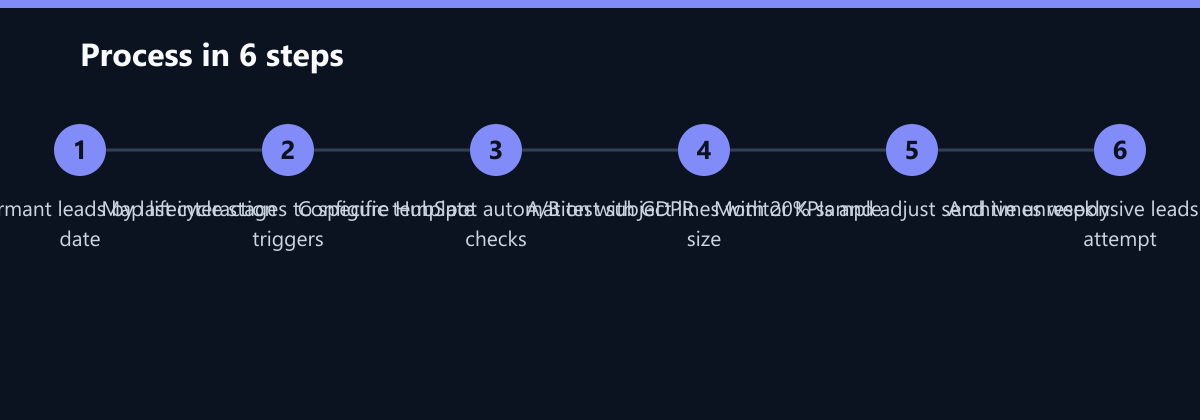
- Segment Your List: Identify all leads dormant for 90+ days.
- Verify Consent: Ensure all leads have valid GDPR consent.
- Map Triggers: Assign each template to the correct lifecycle stage.
- Personalize Content: Insert dynamic fields for company and industry.
- Set Up Testing: Configure A/B tests for subject lines.
- Monitor KPIs: Review performance weekly and adjust as needed.
By following this structured approach, you can transform dormant leads into active opportunities. The key is consistency, relevance, and respect for the DACH business culture. Start with one template, measure the results, and scale what works.
Passend dazu
- Performance Marketing
- 450 New Leads in 90 Tagen: Multichannel-Automation im Maschinenbau
- Reduction of email unsubscribe rate by 40% in DACH mid-market through dynamic segmentation in HubSpot
- Email Marketing
- Affiliate Marketing
- Content & CRO
- B2B Email Automation: 7 Workflow Templates That Boost Revenue
- Email Signature Compliance in DACH: Mandatory Fields and GDPR
- Form Optimization: The 7 Fields That Truly Scare Off B2B Leads in the DACH Region
- Google Ads vs. HubSpot Ads: Cost-Benefit Analysis for B2B Mid-Market Companies
- B2B Crisis Communication: 5 Templates for Automated Negative Review Responses
- Generating 19% New Business from Dormant Event Leads in Southern Europe
- Local PR Strategies for DACH Companies: Getting Featured in Regional Business Journals
- Video Production Capacity Planning: Inhouse vs. Agency Model in DACH
- Logistics: Cross-Sell Strategies for Trade Show Leads in the UK