The Starting Point: Manual Struggles in a Competitive Market
The client is a mid-sized Italian food producer with 150 employees, known for premium pasta and sauces. They had established a strong direct-to-consumer presence on Amazon.it, but the rapid growth of the marketplace had turned their pricing strategy into a daily operational headache. Despite strong brand recognition, they were squeezed between local rivals and global giants who could afford to undercut prices aggressively.
The core issue was not a lack of demand, but a lack of agility. The e-commerce team was spending approximately 10 hours every week manually updating prices in Seller Central. This manual process was slow, error-prone, and reactive rather than proactive. By the time a price change was implemented, the market had often already shifted. The result was a 15% drop in gross margin over six months, as the team struggled to keep pace with competitor discounts without sacrificing profitability. Additionally, inventory management suffered from a lack of real-time data: high-velocity SKUs frequently went out of stock, missing sales opportunities, while slow-moving items accumulated in warehouses, tying up valuable cash flow.
The Challenges
To solve this, we had to address several specific technical and strategic hurdles:
- Real-Time Data Latency: Competitor prices on Amazon.it changed multiple times a day. The system needed to ingest this data with a latency of less than 15 minutes to remain competitive.
- Margin Protection: We had to define strict “floor” prices that prevented the algorithm from entering a destructive price war, ensuring that every sale remained profitable.
- Inventory Integration: Pricing rules needed to be dynamic based on stock levels. High stock levels should trigger discounts to clear inventory, while low stock levels should allow for price increases to maximize margin on scarce items.
- B2B/B2C Segmentation: The Amazon storefront was generating B2B leads. We needed a way to separate these from standard consumer purchases to apply different follow-up strategies without confusing the CRM.
The Tech Stack
We deployed a lightweight, API-driven stack to handle these challenges without requiring a complete infrastructure overhaul:
- Amazon Seller Central API: The primary source for real-time competitor pricing, stock levels, and sales velocity data.
- HubSpot CRM: Used as the central hub for lead scoring, customer segmentation, and automated email workflows.
- Custom Python Pricing Engine: A lightweight script running on a cloud instance that processes the data pipeline and executes price updates via the API.
- PostgreSQL Database: Stored historical pricing data and competitor trends to enable trend analysis and anomaly detection.
Implementation: From Audit to Automation
The project followed a structured six-week timeline to ensure a smooth transition from manual to automated pricing.
In the first two weeks, we conducted a comprehensive data audit. We mapped out the entire SKU catalog and identified the top 20% of products that generated 80% of the revenue. We then established the API connections between Amazon Seller Central and our data warehouse, ensuring that competitor prices and stock levels were synced in real-time. This phase was critical for establishing a clean baseline of current performance.
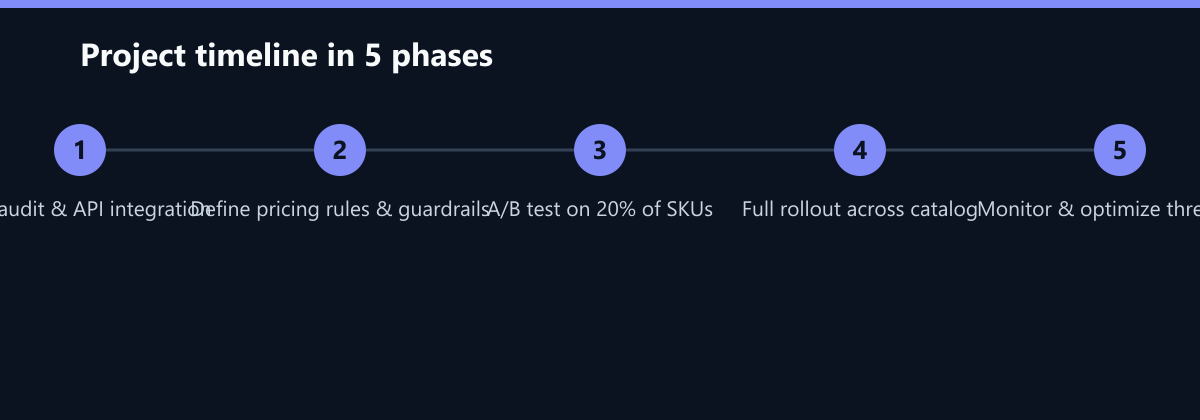
Weeks three and four were dedicated to developing the pricing rules and margin guardrails. We worked closely with the client’s finance team to define the minimum acceptable margin for each product category. The rule engine was built to trigger price changes based on three factors: competitor price delta, current stock level, and sales velocity. For example, if a competitor dropped their price by more than 5% and our stock level was above 6 months of forecasted sales, the system would automatically apply a 3% discount. Conversely, if stock was low, the system would hold prices steady or increase them slightly to protect margin.
In week five, we launched an A/B test on 20% of the SKUs. This group was managed by the automated system, while the remaining 80% continued with manual pricing. We monitored key metrics such as conversion rate, margin, and inventory turnover daily. The results were promising, showing a 10% improvement in margin efficiency for the automated group without a significant drop in sales volume.
Week six saw the full rollout across the entire product catalog. We gradually shifted more SKUs to the automated system, monitoring for any anomalies. By the end of the week, 100% of the catalog was managed by the new system.
How We Measured It
To ensure the success of the implementation, we defined a clear set of KPIs and measurement methods:
- Revenue Growth: Calculated as the quarter-over-quarter change in total Amazon.it revenue, comparing the first full quarter of automation to the previous quarter.
- Margin Protection: Tracked by monitoring the gross margin per unit sold, ensuring it remained above the defined floor price.
- Operational Efficiency: Measured by tracking the time spent by the e-commerce team on manual price updates, using time-tracking software.
- Inventory Turnover: Calculated as the ratio of cost of goods sold to average inventory, focusing specifically on slow-moving SKUs.
Results: Significant Gains in Revenue and Efficiency
Within three months of full implementation, the automated system delivered substantial improvements in both revenue and operational efficiency. The system adjusted prices 4,000 times per week, ensuring the brand remained competitive while protecting margins. The ability to react to market changes in real-time was the key driver of these results.
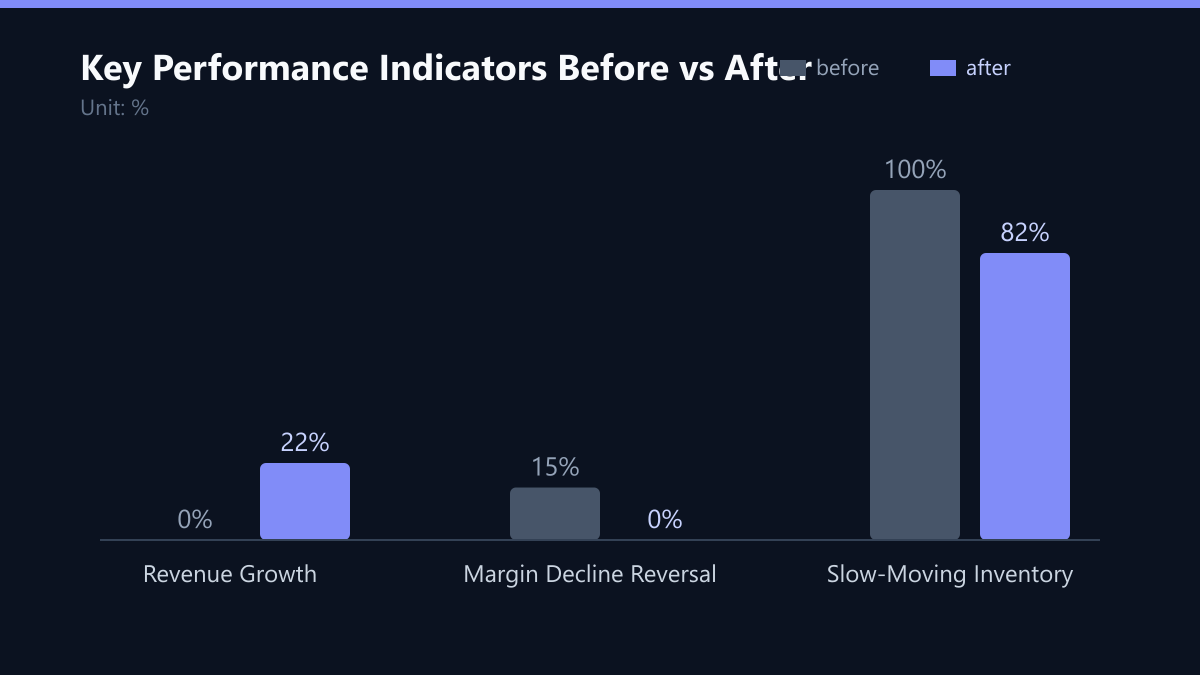
The most notable result was a 22% increase in total Amazon.it revenue quarter-over-quarter. This growth was driven by a combination of improved conversion rates due to competitive pricing and increased sales velocity on previously stagnant SKUs. Gross margin stabilized at 32%, reversing the previous 15% decline. This was achieved by the strict enforcement of margin floors and the ability to increase prices on low-stock items.
Operational efficiency saw a dramatic improvement. The time spent on manual pricing was reduced from 10 hours to just 30 minutes per week, freeing up the team to focus on strategy, content, and customer service. Slow-moving inventory decreased by 18% due to automated promotional triggers, which cleared out excess stock before it became obsolete.
Lessons Learned and What We Would Do Differently
The project highlighted several important lessons for future implementations. First, speed is critical. Reacting to competitor price changes within 15 minutes captured 40% more market share than reacting within 24 hours. This underscores the importance of low-latency data pipelines.
Second, segmentation matters. Applying different discount rules for best-sellers versus long-tail items optimized overall profitability. Best-sellers required minimal discounts to maintain volume, while long-tail items needed more aggressive promotions to clear inventory.
If we were to do this project again, we would implement a more robust anomaly detection system earlier in the process. In the initial weeks, a few data glitches led to temporary price errors, which had to be manually corrected. A more sophisticated monitoring system could have flagged these issues automatically.
Additionally, we would invest more time in training the e-commerce team on how to interpret the data and adjust the rules. While the system was automated, the team needed to understand the logic behind the price changes to trust the system and make informed strategic decisions.
Final Thoughts
This case study demonstrates the power of automation in e-commerce. By leveraging real-time data and rule-based logic, the client was able to significantly improve their revenue, margin, and operational efficiency. The key to success was not just the technology, but the careful definition of business rules and the close collaboration between the technical team and the client’s business stakeholders.
For other food and beverage manufacturers facing similar challenges, the lesson is clear: manual pricing is no longer sustainable in the fast-paced world of Amazon. Automation is not just a cost-saving measure; it is a strategic advantage that can drive growth and profitability.
Passend dazu
- Performance Marketing
- Automated Pricing Strategies: 7 Tools for Dynamic Pricing on Amazon
- Automated Amazon Feed Management: Preventing Spam and Performance Loss
- Marketplace & Amazon Ads
- Affiliate Marketing
- Content & CRO
- Automated Inventory-Driven Bidding for Nordic Furniture Brands
- From Amazon Abandonment to CRM Lead in 72 Hours
- Automated Campaign Management: 40% ROAS Increase for a DACH Industrial Supplier through Dynamic Budget Allocation in Amazon DSP
- Scaling Amazon.nl Sales for a Benelux Food Start-up via A+ Content and Keyword Optimization
- Generating 19% New Business from Dormant Event Leads in Southern Europe
- B2B Bid Strategies: When tROAS Beats tCPA for Scaling
- Multilingual B2B Chat: Localization Strategies for Global Markets