The Rising Cost of Invalid Data
In the competitive UK fintech landscape, every euro spent on customer acquisition is scrutinized. For our client, a fintech company with 150 employees based in the UK, the challenge was not a lack of leads, but a surplus of bad ones. Despite a robust affiliate marketing strategy, the team noticed a disturbing trend: acquisition costs were rising, yet the quality of incoming prospects was deteriorating. The root cause was quickly identified—invalid leads from affiliate partners were flooding the pipeline. These were often bot-generated submissions, duplicate entries, or fraudulent attempts to claim commissions without intent to convert. The manual review process, while well-intentioned, was simply too slow. By the time a human analyst flagged a suspicious lead, the credit check had often already been initiated, wasting resources and exposing the company to potential compliance risks. Marketing spend was effectively leaking into low-quality traffic sources, diluting the overall ROI of the growth strategy.
The Challenges
The situation presented three distinct, interlocking challenges that required a technical rather than just a process-based solution:
- Speed of Detection: Manual review could not keep pace with the volume of incoming traffic. Fraudsters were submitting leads faster than analysts could reject them.
- Lack of Real-Time Signals: The existing CRM setup did not capture device-level or behavioral signals at the point of entry, making it impossible to distinguish a genuine user from a script in real-time.
- Partner Accountability: There was no transparent, real-time way to measure affiliate partner performance against fraud metrics, leading to continued payments for low-quality traffic.
The Tech Stack
To address these issues, we selected a lightweight, high-impact stack that integrated seamlessly with the client’s existing HubSpot environment:
- HubSpot Marketing Hub: The central hub for lead capture, workflow automation, and CRM data storage.
- Third-Party Fraud Detection API: A real-time service that analyzes IP reputation, email validity, and behavioral patterns.
- Device Fingerprinting Tool: A script-based solution to identify unique browsers and detect bot traffic or duplicate sessions.
- Custom Zapier/HubSpot Workflows: Automation logic to trigger rejections, tag leads, and update partner scorecards.
- Looker Studio: A visualization layer to create a real-time dashboard for marketing and sales leadership.
Implementation
The implementation was structured as a four-week sprint, divided into three distinct phases: integration, automation, and monitoring. We began by connecting the third-party verification tools directly to HubSpot custom properties. This allowed every new lead to be scored instantly upon form submission. The system checked the IP address against known fraud databases, validated the email domain, and analyzed the submission speed. If the score exceeded a predefined threshold, the lead was automatically tagged as “High Risk” and routed to a holding area rather than the sales queue.
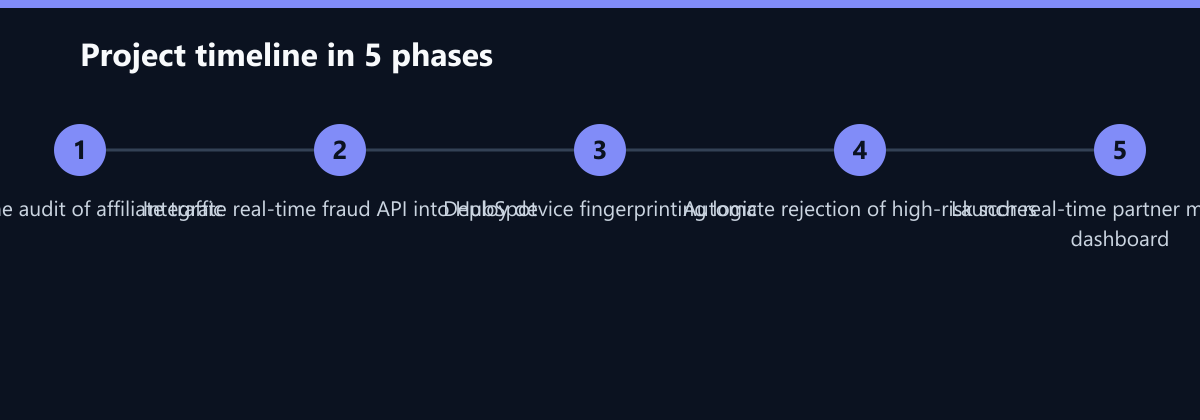
Simultaneously, we implemented device fingerprinting to identify bots and duplicate users. This layer was crucial for catching sophisticated fraud that might pass basic IP checks. We built automated rejection logic that not only flagged suspicious patterns but also actively blocked high-risk submissions from entering the CRM, saving downstream processing costs. To ensure transparency, we created a dedicated dashboard to monitor affiliate partner performance in real time. This dashboard tracked the ratio of valid to invalid leads per partner, allowing the marketing team to pause underperforming partners immediately rather than waiting for monthly reports.
How We Measured It
To ensure the results were accurate and reproducible, we established a clear measurement framework before launch. We defined “fraudulent lead” as any lead that failed the automated verification checks or was manually identified as a bot/duplicate within 24 hours. The baseline was established using the average fraud rate from the three months prior to implementation. We tracked the volume of fraudulent leads weekly, comparing the automated rejection rate against the manual review rate. For the “qualified opportunities” metric, we tracked the number of leads that progressed to the “Qualified” stage in HubSpot, ensuring that the definition of “qualified” remained consistent throughout the project. Time savings were calculated by logging the hours spent by the sales operations team on manual lead screening before and after the automation rollout.
Results
The impact of the new system was immediate and significant. Within the first month, the volume of fraudulent leads dropped sharply as the automated filters began to catch the bulk of the bot traffic. By the end of the three-month period, the data showed a clear and consistent improvement in lead quality. The sales team reported that they were no longer wasting time on dead ends, allowing them to focus their energy on genuine prospects. This shift in focus directly contributed to an improvement in conversion rates, as the sales pipeline became cleaner and more predictable. Marketing budgets were successfully reallocated to high-performing channels, further optimizing the overall acquisition cost.
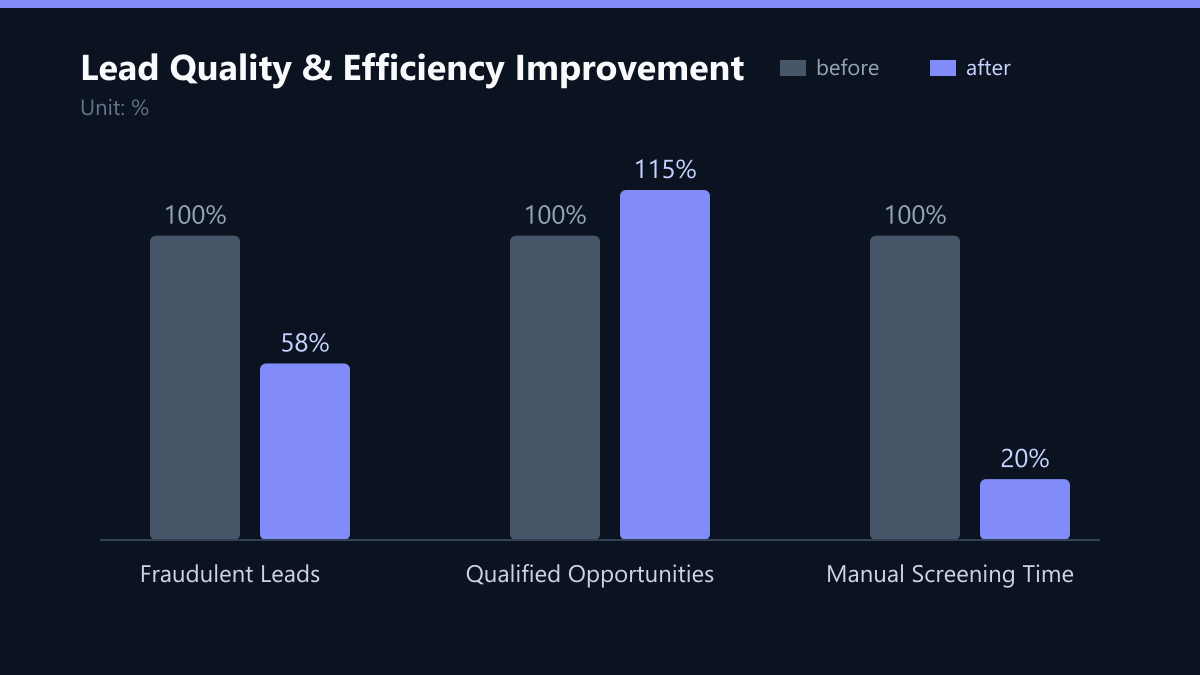
The key outcomes from this project were:
- 42 % reduction in fraudulent lead volume: The automated system successfully filtered out nearly half of the incoming bad data.
- 15 % increase in qualified sales opportunities: With a cleaner pipeline, more leads progressed to the qualification stage.
- 20 hours saved per week on manual lead screening: The sales operations team was freed from repetitive checking tasks, allowing them to focus on strategic initiatives.
What We Would Do Differently Today
While the project was a success, there are areas where we would refine our approach in a similar engagement. First, we would have implemented a more granular A/B testing phase for the fraud detection thresholds during the first two weeks. In this case, we set the thresholds based on industry averages, but a more aggressive testing phase might have caught slightly more nuanced fraud patterns earlier. Second, we would have integrated the device fingerprinting data back into the affiliate partner contracts more formally from the start. While the dashboard provided visibility, having contractual clauses that explicitly penalize partners for high bot-traffic rates would have accelerated the cleanup of the affiliate network. Finally, we would have documented the “false positive” review process more rigorously. Although rare, a few legitimate leads were initially flagged due to strict IP reputation rules. A more streamlined manual override process would have reduced friction for the sales team during the initial rollout.
Lessons Learned
This case study underscores a critical principle in modern digital marketing: automated validation must happen at the point of entry, not after. Waiting for manual review creates a lag that allows fraud to permeate the system. Partner performance should be tracked with the same rigor as paid media; if an affiliate partner cannot deliver clean data, they should be treated as a low-performing ad channel. Regular audits of detection rules are essential to prevent new fraud patterns from emerging, as bad actors constantly adapt their methods. By combining real-time technology with disciplined process management, fintechs can protect their acquisition budgets and ensure that their sales teams are working with the highest quality prospects possible.
Passend dazu
- Performance Marketing
- SEO & AI Search (GEO)
- B2B Form Optimization: Reduce Lead Acquisition Costs
- 5 KPIs to Identify Bot Traffic in Affiliate Programs
- Affiliate Marketing
- Content & CRO
- CRM Marketing
- Cutting B2B Acquisition Costs by 25% in Benelux Logistics
- Cutting US Lead Data Loss by 15% with a First-Party Tag Manager
- Industry 4.0 Provider in Benelux: Reduce Lead Generation Costs by 45% with Segmented Landing Pages and A/B Testing
- Cutting CAC by 22% in the Scandinavian Logistics Market
- Cutting Amazon Search Costs by 22% via Data-Driven Keyword Clustering
- Cutting Data Inconsistencies by 40% in B2B Finance
- Reducing Storage Costs by 30% via Predictive Demand Forecasting
- Cutting Manual Marketing Workload by 50% in Machinery Manufacturing
- Chatbot Fallback Strategies to Prevent Lead Loss
- Cutting Webinar Costs by 25% with Multilingual Content Repurposing
- Cutting Tool Costs by 20% Through Stack Consolidation
- Designing Chatbot Flows for Precise Lead Qualification
- Reversing Negative Sentiment in Six Weeks for a Berlin Fintech
- Scaling Discord Engagement to 50k Members for a Fintech App
- Cutting Sales Effort by 40% Through Precision Lead Scoring in Dutch Logistics