The Hidden Cost of Generic Messaging
In the B2B SaaS landscape, relevance is not a luxury; it is the primary driver of conversion. Yet, many teams still treat their email lists as monolithic blocks, sending the same pitch to a CTO as they do to a junior analyst. This approach dilutes your message, wastes ad spend, and erodes brand trust. When you fail to segment, you are not just sending emails; you are broadcasting noise into a crowded inbox.
This lack of precision leads to two immediate, measurable problems. First, you see high unsubscribe rates, as irrelevant content triggers immediate opt-outs from decision-makers who value their time. Second, open rates plummet because recipients ignore emails that do not address their specific pain points. Effective segmentation transforms this broad blast into a targeted conversation. It aligns your message with the recipient’s role, industry, and stage in the buyer’s journey, turning passive readers into active prospects.
To fix this, you must move beyond surface-level lists and implement a dynamic, data-driven strategy. The following five mistakes are the most common barriers to high-performing B2B email campaigns. Identifying and correcting them can lead to significant improvements in engagement and revenue.
Mistake 1: Relying Solely on Demographics
Many marketing teams segment based on company size or industry alone. This is a surface-level approach that misses behavioral intent. A mid-sized manufacturing firm and a mid-sized software company may have the same number of employees, but they have vastly different technical stacks, budget cycles, and pain points. Treating them as identical is a fundamental error.
Why it fails:
- It ignores actual user behavior and intent signals.
- It assumes all companies in a vertical have the same needs.
The Fix:
- Combine demographics with firmographic data for context.
- Prioritize behavioral triggers like page visits, content downloads, or time on site.
- Use role-based segmentation to tailor language. For example, focus on ROI and cost-savings for CFOs, while emphasizing ease-of-use and integration capabilities for developers.
By layering behavioral data over demographic basics, you create segments that reflect actual buying intent rather than just company profiles.
Mistake 2: Ignoring the Buyer’s Journey Stage
Sending a pricing sheet to a user who just downloaded a generic blog post is a critical error. It disrupts the natural flow of trust-building. B2B sales cycles are long and require careful nurturing. Pushing a sales pitch too early often backfires, causing prospects to disengage or feel pressured.
Common Errors:
- Pushing sales pitches too early in the awareness phase.
- Failing to re-engage dormant leads with new value or insights.
Best Practices by Stage:
- Awareness Stage: Focus on educational content, industry insights, and problem-awareness. The goal is to build credibility, not to sell.
- Consideration Stage: Offer case studies, product demos, and comparisons. Here, the prospect is evaluating solutions, so provide proof of value.
- Decision Stage: Provide pricing details, security documentation, and onboarding guides. This is the time to remove friction and facilitate the purchase.
Align your email content strictly with the user’s current stage. If you are unsure of their stage, use engagement data to infer it. A user who has visited the pricing page three times is in the decision stage, regardless of how long they have been in your database.
Mistake 3: Static Segments That Never Update
Markets change, and so do your leads. A static segment list becomes obsolete within weeks. If a user upgrades their plan, visits the pricing page, or downloads a whitepaper, their segment status must change immediately. Static lists lead to outdated data and irrelevant messaging, causing you to miss critical opportunities for cross-selling or upselling.
The Problem with Static Lists:
- Outdated data leads to irrelevant messaging and increased unsubscribe rates.
- Missed opportunities for timely cross-selling or upselling.
How to Implement Dynamic Segmentation:
- Integrate your CRM with your email platform in real-time. Ensure that data flows bidirectionally.
- Use triggers to move users between segments automatically based on actions or inactions.
- Regularly audit segment rules for accuracy and relevance.
Dynamic segmentation ensures that every email reflects the most current status of the lead. For example, if a user stops opening emails for 30 days, they should automatically move to a re-engagement segment, not stay in an active nurture sequence.
Mistake 4: Over-Segmentation and Fragmentation
More segments do not always mean better results. Creating too many micro-segments can fragment your audience. This makes it difficult to gather meaningful data and manage campaigns efficiently. If you have 50 segments with only 10 people each, you cannot draw statistically significant conclusions from your A/B tests.
Signs of Over-Segmentation:
- Too few emails per segment to measure statistical significance.
- High operational overhead in creating unique content for each group.
- Inconsistent brand messaging across different segments.
Optimization Strategy:
- Start with 5-7 core segments. These should be your high-value, high-intent groups.
- Merge similar groups if data volume is low.
- Focus on high-impact segments first, such as high-intent leads or at-risk customers.
Balance granularity with manageability. A well-maintained segment with 500 active users is far more valuable than a fragmented segment with 50 inactive users.
Mistake 5: Failing to Align with Sales Teams
Marketing and sales often operate in silos. If your segmentation logic does not match the sales team’s definition of a qualified lead, you create friction. Sales reps may ignore leads that do not fit their immediate criteria, leading to wasted resources and missed opportunities.
Consequences of Misalignment:
- Sales teams perceive marketing leads as low quality.
- Marketing receives no feedback on lead quality or conversion issues.
- Wasted resources on leads that will never convert.
Alignment Steps:
- Define a shared MQL (Marketing Qualified Lead) criteria. Ensure that both teams agree on what constitutes a qualified lead.
- Share segmentation data with sales via CRM. Give sales visibility into the journey of the lead.
- Hold regular feedback loops to refine segment definitions. Use sales feedback to adjust marketing segments.
Unified segmentation ensures that both teams work toward the same goals. When sales and marketing are aligned, you create a seamless experience for the prospect and a more efficient process for your team.
Typical Mistakes to Avoid
Even with a solid strategy, small errors can derail your segmentation efforts. Here are four common pitfalls:
- Ignoring Data Hygiene: Sending emails to bounced or invalid addresses hurts your domain reputation. Clean your list before segmenting.
- Neglecting Mobile Optimization: Most B2B users check email on mobile. Ensure your segments and content are mobile-friendly.
- Failing to Test: Never assume a segment works without testing. A/B test subject lines and content for each major segment.
- Lack of Documentation: Keep a clear record of your segment definitions and rules. This ensures consistency and makes onboarding new team members easier.
How You Measure Success
To determine if your segmentation strategy is working, you need to track specific KPIs. Here are the most important metrics and how to measure them:
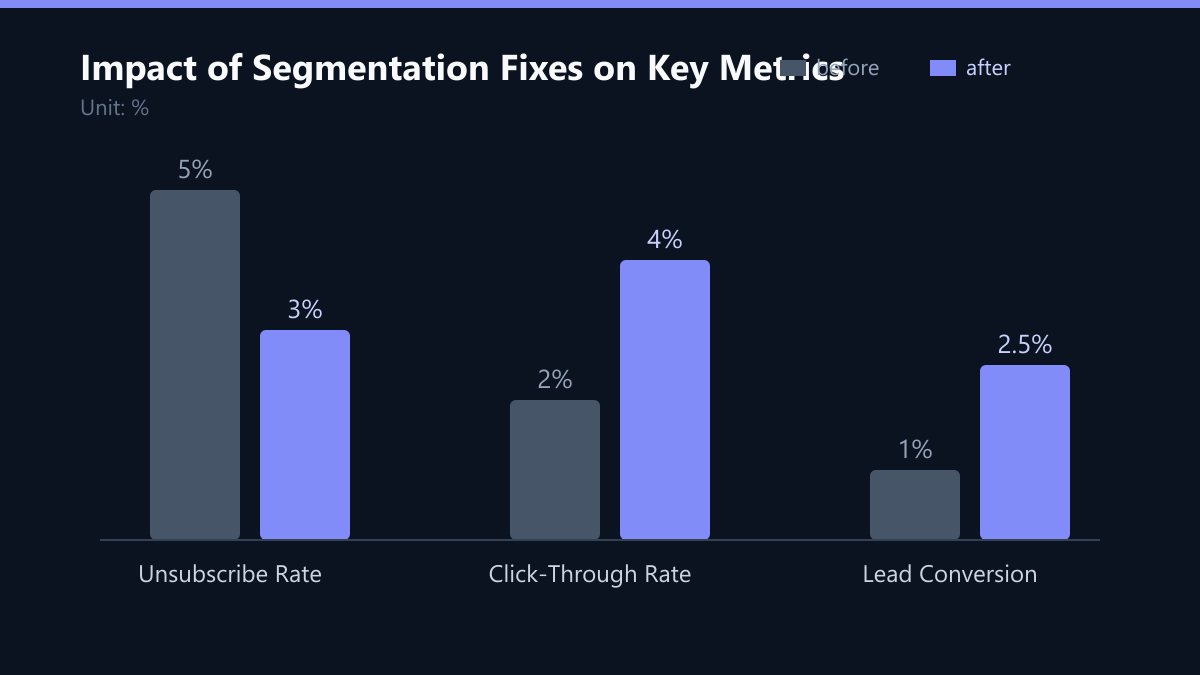
- Unsubscribe Rate: Track the percentage of users who unsubscribe after each campaign. A drop in this rate indicates improved relevance. Use your email platform’s built-in reporting tools to monitor this metric.
- Click-Through Rate (CTR): Measure the percentage of recipients who click on links in your emails. Higher CTRs indicate that your content is resonating with the segment. Compare CTRs across different segments to identify which groups are most engaged.
- Conversion Rate: Track the percentage of users who complete a desired action, such as downloading a whitepaper or requesting a demo. This is the ultimate measure of segment effectiveness. Use UTM parameters to track conversions back to specific email campaigns.
- Sales Pipeline Value: Monitor the value of opportunities created from email-nurtured leads. This metric shows the direct impact of segmentation on revenue. Use your CRM to track the source of each opportunity and attribute it to the corresponding email segment.
By tracking these KPIs, you can identify which segments are performing well and which need adjustment. Use this data to refine your strategy continuously.
Checklist for Implementation
Use this checklist to ensure your segmentation strategy is robust and effective:
- Audit Data: Verify the accuracy of your CRM and email platform data. Remove duplicates and invalid addresses.
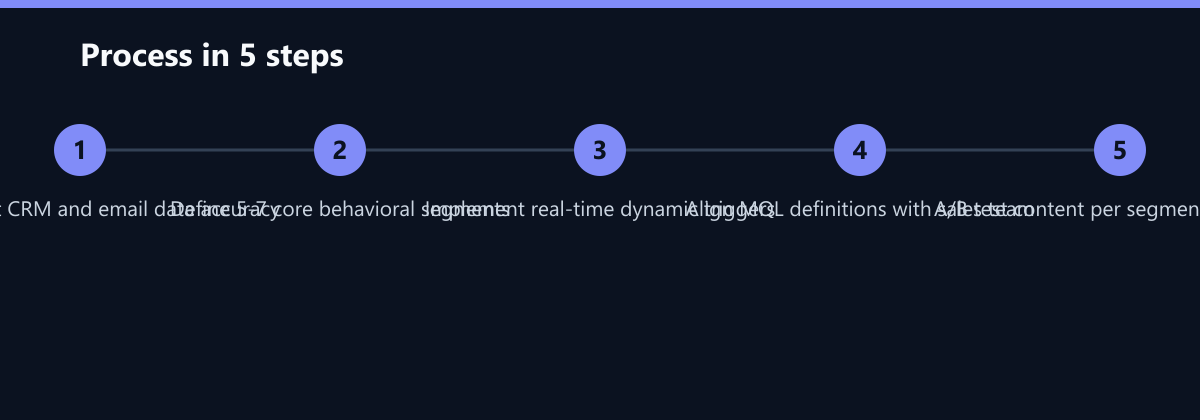
- Define Core Segments: Identify 5-7 high-value segments based on behavior and demographics. Document your segment rules.
- Automate Updates: Set up real-time triggers for dynamic segmentation. Ensure that users move between segments automatically based on their actions.
- Align with Sales: Define a shared MQL criteria with your sales team. Share segmentation data via CRM and establish regular feedback loops.
- Test and Measure: A/B test subject lines and content for each segment. Track KPIs such as unsubscribe rate, CTR, and conversion rate.
- Refine: Adjust segments based on performance data and sales feedback. Review your strategy quarterly to ensure it remains relevant.
Consistent optimization will improve your email performance and drive higher ROI. By avoiding these five common mistakes, you can transform your email marketing from a generic broadcast into a powerful, targeted engine for B2B growth.
Passend dazu
- Integration von Affiliate-Performance-Daten in das CRM für eine skandinavische E-Commerce-Marke
- Reduction of email unsubscribe rate by 40% in DACH mid-market through dynamic segmentation in HubSpot
- Email automation for a Scandinavian B2B logistics provider: Increased Customer Lifetime Value by 22%
- Boosting email click-through rate to 12% in the Spanish B2B software sector through dynamic product blocks
- Email Marketing
- Performance Marketing
- Affiliate Marketing
- 5 B2B Email Flows That Actually Fill Your Pipeline
- Dynamic Email Content: Personalize Campaigns Without Manual Segmentation
- 5 Common Reasons Your E-Mails Land in Spam and How to Fix Deliverability in 30 Days
- Industry-Specific Email Segmentation for Higher Conversion Rates
- Omnichannel Attribution: 5 Errors Distorting Your ROI
- Behavioral Email Segmentation for SaaS Growth
- Top 5 Tools to Monitor Your Brand in AI Search Results
- How Marketplace Fee Structures Impact Your Margins
- 7 Common Mistakes in Automated Sales Trigger Design
- Domain Authority in the AI Era: Positioning Your Brand in LLM Training Data
- Measuring AI Visibility: Tools and Metrics for GEO Performance
- Building a Robust Double Opt-In Process for UK Email Compliance
- Attribution Modeling in B2B: Why Last-Click Is Killing Your Budget
- Automating Sales Performance Dashboards for a UK Fintech
- How to Identify and Fix Leaks in Your CRM Pipeline
- Automating Affiliate Email Workflows in Your CRM
- Zalando Performance Ads: Campaign Structure and Bidding Strategies
- Structure Your Website for Maximum AI Citation
- LLM Readiness Check: Preparing Your Site for AI Search
- 5 Critical Mistakes to Avoid in Your HubSpot Implementation
- Affiliate vs. Performance Marketing: Defining Clear Roles in Your Growth Stack