The Logic Behind High-Performing B2B Copy
B2B buyers do not click on impulse. They follow a logical decision path, evaluating risk, cost, and utility. Your ad copy must address specific pain points and demonstrate immediate value to filter out irrelevant traffic and attract qualified leads. Most B2B SaaS companies waste budget on vague ads that fail to confirm the searcher is in the right place. Specificity drives clicks because it aligns with the user’s intent to solve a problem, not just to browse.
To succeed, your copy must focus on ROI by highlighting cost savings or revenue gains. It must reduce perceived risk through guarantees or free trials. Finally, clarity must outweigh creativity. Be direct about what you offer. This approach ensures that your ad speaks the language of the buyer, not the seller.
Core Structural Elements
Before diving into specific formulas, understand the three pillars of B2B ad copy:
- Focus on ROI: Highlight cost savings or revenue gains. Buyers need to see the bottom-line impact.
- Reduce Risk: Use guarantees, free trials, or risk-free periods. This lowers the barrier to entry.
- Clarity Over Creativity: Be direct. Avoid clever wordplay that obscures the core offer. The user should understand your value proposition in under five seconds.
Formula 1: The Problem-Solution Pair
Start with the user’s primary frustration, then present your product as the fix. This structure creates immediate relevance and signals that you understand their daily challenges.
Headline Example: “Stop Chasing Leads Manually”
Description Example: “Automate follow-ups with AI-driven scoring. Save 10 hours per week. Try free for 14 days.”
Implementation Steps:
- Identify the top three pain points from recent sales calls.
- Write a headline that explicitly names the pain.
- Write a description that names the specific solution.
This formula works best for bottom-of-funnel keywords where intent is high. It bridges the gap between the user’s problem and your service.
Formula 2: The Quantified Benefit
Numbers build trust faster than adjectives. Specific metrics prove your claims are based on data. Avoid generic terms like “fast” or “easy” without context. In B2B, “fast” is subjective; “23% faster” is verifiable.
Headline Example: “Increase Email Open Rates by 23%“
Description Example: “Personalize subject lines at scale. Trusted by 500+ SaaS teams. See live demo.”
Key Principles:
- Use Averages: Cite average customer results, not outliers. This builds credibility.
- Timeframe: Include how long it takes to see results. For example, “in 30 days.”
- Scale: Mention the number of users or data points processed to show robustness.
Quantified benefits reduce perceived risk for the buyer. They can validate the claim against their own benchmarks, making the click a logical next step.
Formula 3: The Competitive Alternative
Position your product against a known competitor or a manual process. This helps users compare options quickly. It is highly effective for branded and category keywords where users are actively evaluating options.
Headline Example: “Better Than Spreadsheets for CRM”
Description Example: “Real-time sync with Salesforce. No more manual data entry. Switch in 2 days.”
Strategic Tips:
- Highlight Gaps: Focus on what the alternative lacks. Do not attack the competitor; highlight your superiority.
- Ease of Switching: Emphasize low migration effort. Fear of change is a major barrier in B2B.
- Feature Parity: Show you offer the same core features plus more.
Do not name competitors directly unless using their trademarks legally. Instead, refer to them as “legacy tools” or “manual processes” to avoid legal issues while maintaining relevance.
Formula 4: The Social Proof Anchor
B2B buyers rely on peer validation. Mentioning well-known clients or industry awards builds instant credibility. This is crucial for new entrants in the market who lack brand recognition.
Headline Example: “Trusted by 2,000+ Marketing Teams”
Description Example: “Join Fortune 500 companies using our automation platform. 4.8/5 rating on G2.”
Implementation Details:
- Specific Names: Use recognizable logos if permitted. This creates an instant association with success.
- Ratings: Cite G2, Capterra, or Trustpilot scores. Third-party validation is more trusted than self-reported metrics.
- Case Studies: Link to a specific success story in the description. This provides depth and evidence.
Social proof reduces the fear of choosing a new vendor. It acts as a trust signal during the initial click decision, especially for high-stakes purchases.
Formula 5: The Urgency Trigger
Use time-sensitive offers to drive immediate action. This works well for seasonal promotions or limited-seat trials. Avoid fake urgency, as it damages brand trust and can lead to ad disapproval.
Headline Example: “50% Off Annual Plans Until Friday”
Description Example: “Save $1,200 per year. Limited to first 50 sign-ups. Claim your discount now.”
Best Practices:
- Clear Deadline: State the exact date or time. Vague deadlines are ignored.
- Limited Quantity: Mention remaining spots or licenses. Scarcity drives action.
- Direct CTA: Use verbs like “Claim,” “Save,” or “Start.” Be explicit about the next step.
Urgency increases click-through rates by creating a fear of missing out. It is most effective for high-intent keywords where the user is ready to buy but needs a push.
Formula 6: The Question Hook
Ask a question that mirrors the user’s search intent. This engages the reader mentally and encourages them to seek the answer. It increases relevance scores by aligning directly with the search query.
Headline Example: “Ready to Automate Your Lead Scoring?”
Description Example: “Set up AI-driven scoring in 15 minutes. No code required. Start free trial.”
Guidelines:
- Keep it Short: Use 5-8 words maximum. Long questions get truncated.
- Align with Intent: Match the question to the keyword. If the user searches “how to automate lead scoring,” ask “Ready to automate lead scoring?”
- Provide Answer: Ensure the description answers the question. The ad should feel like a conversation starter.
Question hooks work well for informational and commercial investigation keywords. They bridge the gap between research and purchase by engaging the user’s curiosity.
Testing and Optimization Strategy
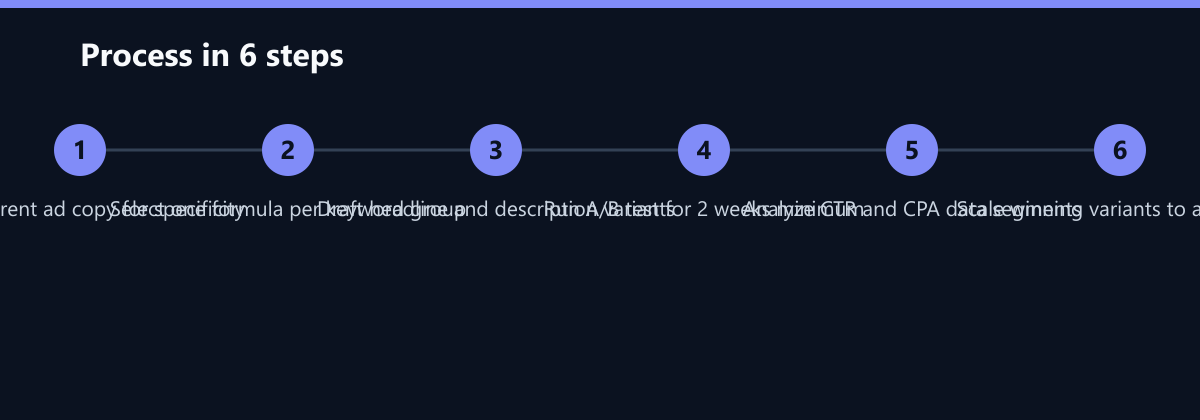
You cannot rely on intuition alone. Run A/B tests to determine which formula resonates with your audience. Track click-through rate (CTR) and conversion rate separately. A high CTR does not guarantee a high conversion rate; you must optimize both.
Testing Protocol:
- Test One Variable: Change only the headline or description, not both. This isolates the impact of each element.
- Minimum Sample Size: Run tests for at least two weeks. This ensures you capture a full business cycle and avoid statistical anomalies.
- Segment Data: Analyze results by device and keyword group. What works on desktop may not work on mobile.
| Metric | Target | Action |
|---|---|---|
| CTR | > 3.5% | Optimize headline |
| Conv. Rate | > 2.0% | Optimize landing page |
| CPA | < $50 | Adjust bid strategy |
Continuous testing ensures your ad copy evolves with market changes. Review performance monthly to prune underperforming variants. Do not let bad ads run indefinitely; they waste budget and lower account quality scores.
Typical Mistakes to Avoid
Even with the right formulas, implementation errors can sabotage your results. Here are the most common pitfalls:
- Vague Value Propositions: Using words like “world-class” or “best-in-class” without evidence. B2B buyers are skeptical of superlatives. Replace them with specific metrics or outcomes.
- Mismatched Intent: Writing copy for bottom-of-funnel keywords that sounds like top-of-funnel research. If the user is searching for “buy CRM software,” your ad should not be about “what is CRM?” Match the tone and intent of the keyword.
- Ignoring Mobile Truncation: Writing headlines that are too long. On mobile, headlines are often cut off after 30 characters. Always preview your ads on mobile to ensure the key message is visible.
- Lack of Clear CTA: Failing to tell the user what to do next. “Learn more” is weak. “Start free trial” or “Get demo” is strong. Be explicit about the action you want the user to take.
How You Measure Success
Success in B2B ad copy is not just about clicks. It is about qualified leads and revenue. Use these KPIs to measure the impact of your copy changes:
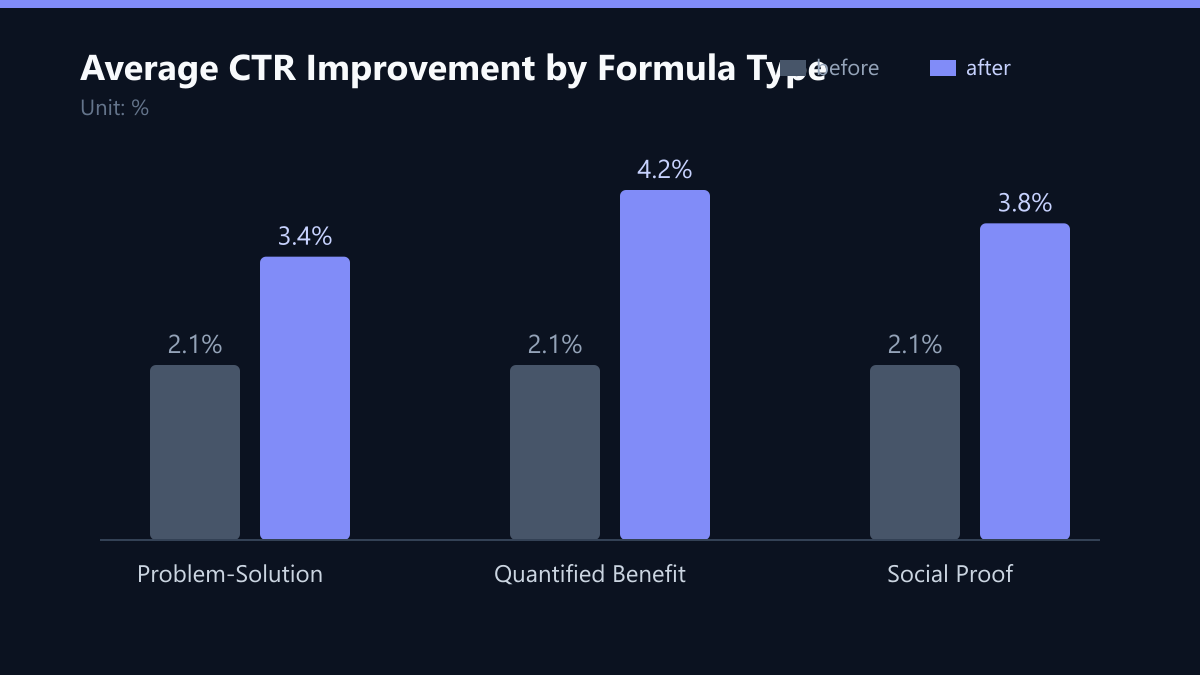
- Click-Through Rate (CTR): The primary metric for ad copy effectiveness. A baseline of 2.0-3.0% is common, but top performers often exceed 4.0%. If your CTR is below 2.5%, your copy is not resonating.
- Cost Per Acquisition (CPA): The cost to acquire a customer. While CTR measures interest, CPA measures value. A high CTR with a high CPA indicates a mismatch between ad promise and landing page reality.
- Conversion Rate: The percentage of clicks that result in a lead. If your CTR is high but conversion is low, your landing page may not be aligned with your ad copy. Ensure consistency in messaging.
- Return on Ad Spend (ROAS): The revenue generated per dollar spent. This is the ultimate metric. Aim for a ROAS of 3.0 or higher. If your ROAS is below 1.0, you are losing money on every ad click.
Measure these KPIs weekly during testing and monthly during optimization. Use statistical significance tests to ensure your results are not due to chance.
Checklist for Implementation
Use this checklist to ensure your B2B ad copy is optimized for performance:
- Specificity: Does the ad mention a specific pain point or benefit? Avoid generic language.
- Quantification: Are there numbers or metrics in the copy? Use averages, not outliers.
- Relevance: Does the ad match the search intent of the keyword? Check the keyword group.
- Clarity: Is the value proposition clear in under five seconds? Read it aloud to test.
- CTA: Is there a clear call to action? Use strong verbs like “Start,” “Save,” or “Get.”
- Length: Are headlines under 30 characters and descriptions under 90 characters? Check mobile preview.
- Proof: Is there social proof or a risk-reducer? Mention client counts, ratings, or free trials.
- Testing: Is an A/B test planned? Define the variable, sample size, and duration.
By following this checklist, you ensure that every ad you publish is aligned with B2B buyer expectations and optimized for conversion.
Final Thoughts
B2B ad copy is not about being creative; it is about being clear. The seven formulas outlined above provide a framework for creating ads that resonate with logical, risk-averse buyers. Start by auditing your current ads for specificity. Then, select one formula per keyword group and test it against your control. Measure CTR, CPA, and ROAS to determine what works. Iterate continuously. The market changes, and your copy must evolve with it. By focusing on ROI, reducing risk, and maintaining clarity, you will drive higher-quality traffic and improve your overall marketing ROI.