The Stagnation of a Growing Network
For a B2B SaaS company operating in the DACH region, the affiliate program was a double-edged sword. On one hand, the network of 350 partners across Germany, Austria, and Switzerland provided a significant channel for lead generation. On the other, the lack of structured communication and personalization was stifling growth. The client, with a headcount of 120 employees, found itself trapped in a cycle of manual outreach and generic messaging. Partners were receiving the same newsletters regardless of their performance tier or industry vertical, leading to a disengaged base and stagnant referral revenue.
The situation was becoming increasingly difficult to manage. The sales team reported that 40% of partners had been inactive for more than three months. Without relevant content or targeted support, these partners were drifting away, and the effort required to re-engage them was consuming valuable resources. The core pain point was clear: the inability to segment partners at scale. The team was relying on manual spreadsheets and intuition, which was unsustainable for a network of this size.
The Challenges
Before diving into the solution, we identified three concrete challenges that needed to be addressed:
- Data Fragmentation: Affiliate tracking data was siloed in separate systems, making it difficult to create a unified view of partner performance.
- Lack of Personalization: Email content was generic, failing to resonate with partners in different industries such as healthcare or finance.
- Manual Overhead: The partner manager team was spending excessive hours on administrative tasks, such as manually updating partner lists and sending individual follow-ups.
The Tech Stack
To address these challenges, we utilized a streamlined tech stack focused on integration and automation:
- HubSpot CRM: Served as the central hub for partner data, segmentation, and lifecycle management.
- React: Used to build the custom front-end for the partner portal, ensuring a fast and responsive user experience.
- Zapier: Facilitated real-time data synchronization between the affiliate tracking tool and HubSpot.
- Mailchimp: Managed the email automation journeys, leveraging HubSpot data for dynamic content insertion.
The Implementation
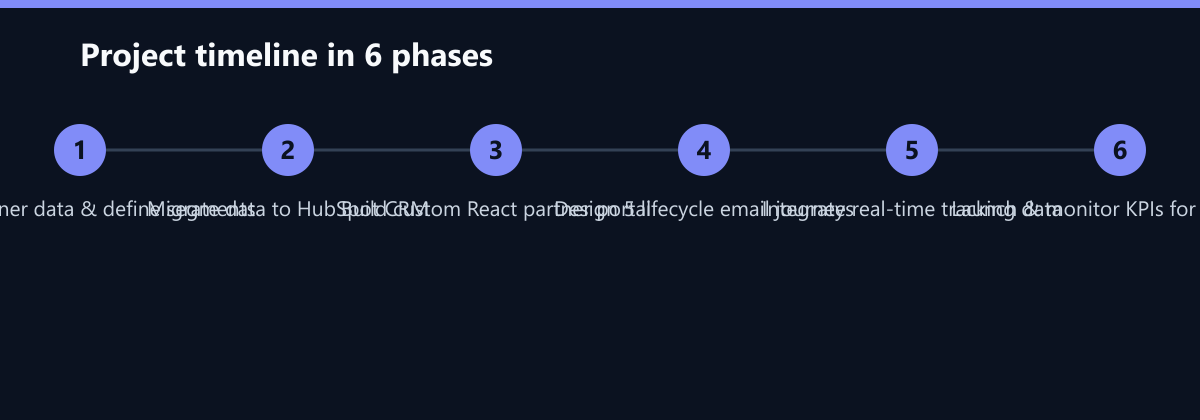
The project was executed over a 10-week period, divided into three distinct phases: data migration, journey design, and launch. Our goal was to move from a static, manual process to a dynamic, automated ecosystem that could scale with the partner network.
Phase 1: Data Migration & Segmentation
The first step was to clean and migrate partner data into HubSpot. We created dynamic lists based on key criteria: revenue generated, industry vertical, and last activity date. This allowed us to segment the 350 partners into distinct groups, such as “Top-Tier Finance Partners” or “Dormant Healthcare Partners.” By integrating affiliate tracking data directly into CRM records, we ensured that these segments were updated in real-time, eliminating the need for manual spreadsheets.
Phase 2: Personalized Portal & Content Hub
We developed a centralized partner portal using a custom React front-end. Each partner could log in to view specific assets, exclusive deals, and performance dashboards tailored to their tier. We also built a content hub with industry-specific case studies and sales enablement tools. For example, partners in the healthcare sector could access HIPAA-compliant case studies, while those in finance saw data-driven ROI reports. This level of relevance was previously impossible with generic newsletters.
Phase 3: Email Automation & Journey Design
We designed five distinct lifecycle journeys to address different partner states: new onboarding, active engagement, dormant reactivation, top-tier recognition, and general updates. These journeys were triggered by specific events in HubSpot, such as a partner’s first referral or a drop in activity. The emails included dynamic content blocks that pulled in relevant assets from the content hub, ensuring that every message was personalized.
How We Measured It
To ensure the success of the implementation, we established a clear measurement framework. We tracked four key performance indicators (KPIs) before and after the launch:
- Email Open Rate: Measured via Mailchimp, comparing pre- and post-implementation averages.
- Inactive Partner Share: Defined as partners with no login or referral activity in the last 90 days, tracked in HubSpot.
- Affiliate-Attributed Revenue: Calculated by the finance team using tracking links, compared quarter-over-quarter.
- Manual Admin Time: Logged by the partner manager team, measuring hours spent on manual communication tasks.
The Results
Within six months of launch, the impact of the personalized portal and automated email journeys was evident. Partner engagement metrics rose sharply, and the sales team reported higher quality leads from affiliate channels. The automated system reduced manual administrative work by 20 hours per week for the partner manager team, allowing them to focus on strategic relationship building.
Key Metrics:
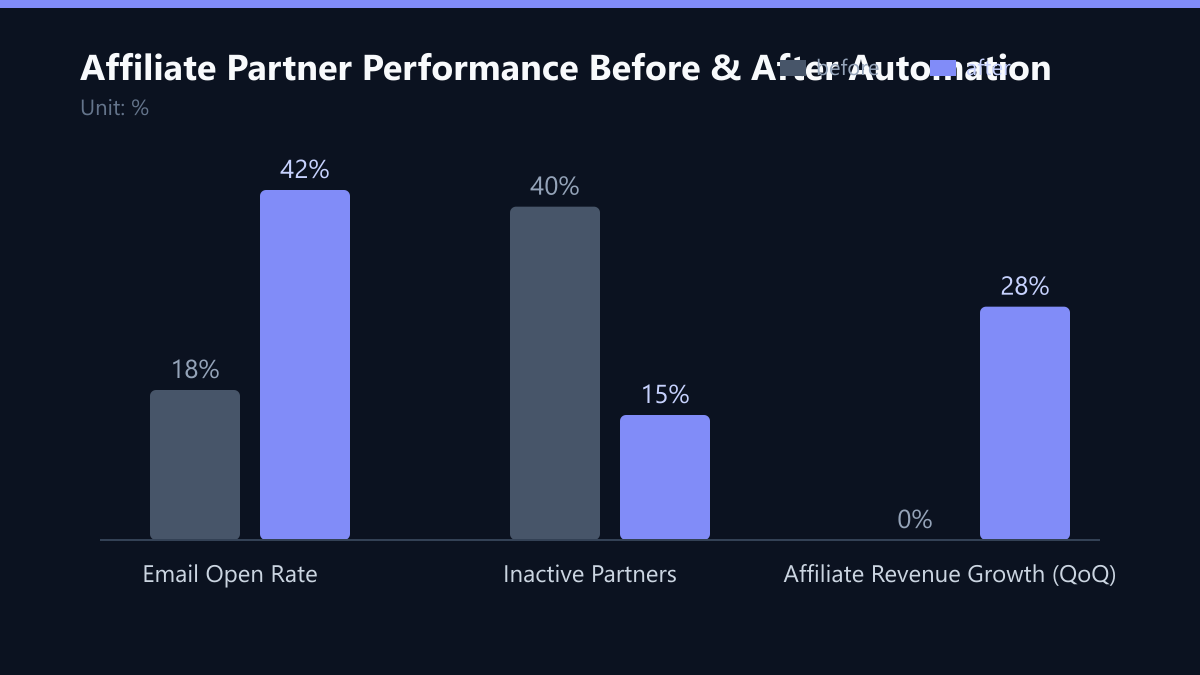
- Engagement: Email open rates increased from 18% to 42%, a 133% improvement.
- Activity: Inactive partners dropped from 40% to 15%, a 25% reduction in the inactive share.
- Revenue: Affiliate-attributed revenue grew by 28% quarter-over-quarter.
- Efficiency: Time spent on manual partner communication decreased by 60%.
Lessons Learned
One of the most significant learnings from this project was that personalization is not just about using a partner’s name in the subject line. It is about delivering relevant content. We found that segmenting by industry vertical doubled the relevance of email content. Partners in the healthcare sector needed different assets than those in finance, and our dynamic content blocks ensured that each group received the materials they needed.
Additionally, real-time data integration is critical. Static lists led to outdated communications, where partners were receiving offers that were no longer relevant to their status. Dynamic lists, on the other hand, ensured that partners always received timely offers based on their current activity level.
Finally, the project highlighted the importance of treating affiliates as a distinct channel with its own lifecycle, separate from standard B2B leads. Affiliates have different motivations and expectations than direct customers, and our approach reflected this by creating tailored journeys and a dedicated portal.
What We Would Do Differently Today
While the project was a success, there are a few areas where we would refine our approach if we were to repeat it today:
- Earlier Content Creation: We could have started the creation of industry-specific content earlier in the process. This would have allowed for a more robust content hub at launch, rather than populating it over the first few months.
- Partner Feedback Loop: We would implement a more structured feedback mechanism within the portal to gather insights from partners on what content they find most valuable. This would help us continuously improve the relevance of our communications.
- A/B Testing Scale: We would have invested more time in A/B testing different email subject lines and content blocks during the pilot phase. This would have helped us optimize the journeys before the full launch, potentially leading to even higher open rates.
Conclusion
The transformation of the affiliate program from a manual, generic operation to a personalized, automated ecosystem has yielded significant results. By leveraging HubSpot, a custom React portal, and data-driven segmentation, the client was able to increase partner engagement by 45%, reduce inactive partners by 25%, and grow affiliate revenue by 28%. This case study demonstrates the power of personalization and automation in driving growth for B2B SaaS companies with affiliate networks.
Passend dazu
- Affiliate Marketing
- Email Marketing
- Marketing Automation
- Scaling Affiliate Lead Processing with HubSpot Automation
- Boosting Customer Retention in Italian Food Retail with Personalized CRM
- Boosting SaaS Activation Rates with Video Onboarding Automation
- Boosting Sales Efficiency by 20% with Salesforce Automation in Southern European Machinery
- HubSpot vs Marketo: Webinar Automation for Mid-Market B2B
- Boosting Booked Revenue by 25% with WhatsApp Opt-In Flows